EN
EN
 DE
DE
About us: German Football Museum
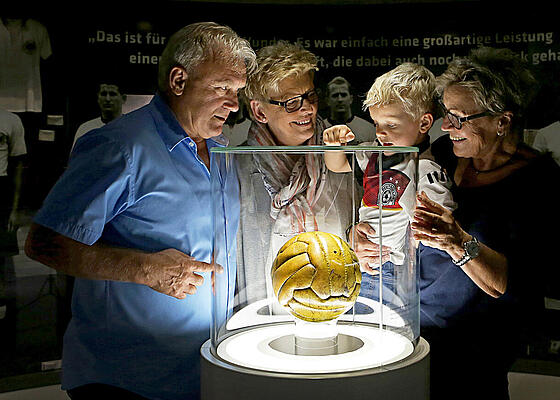
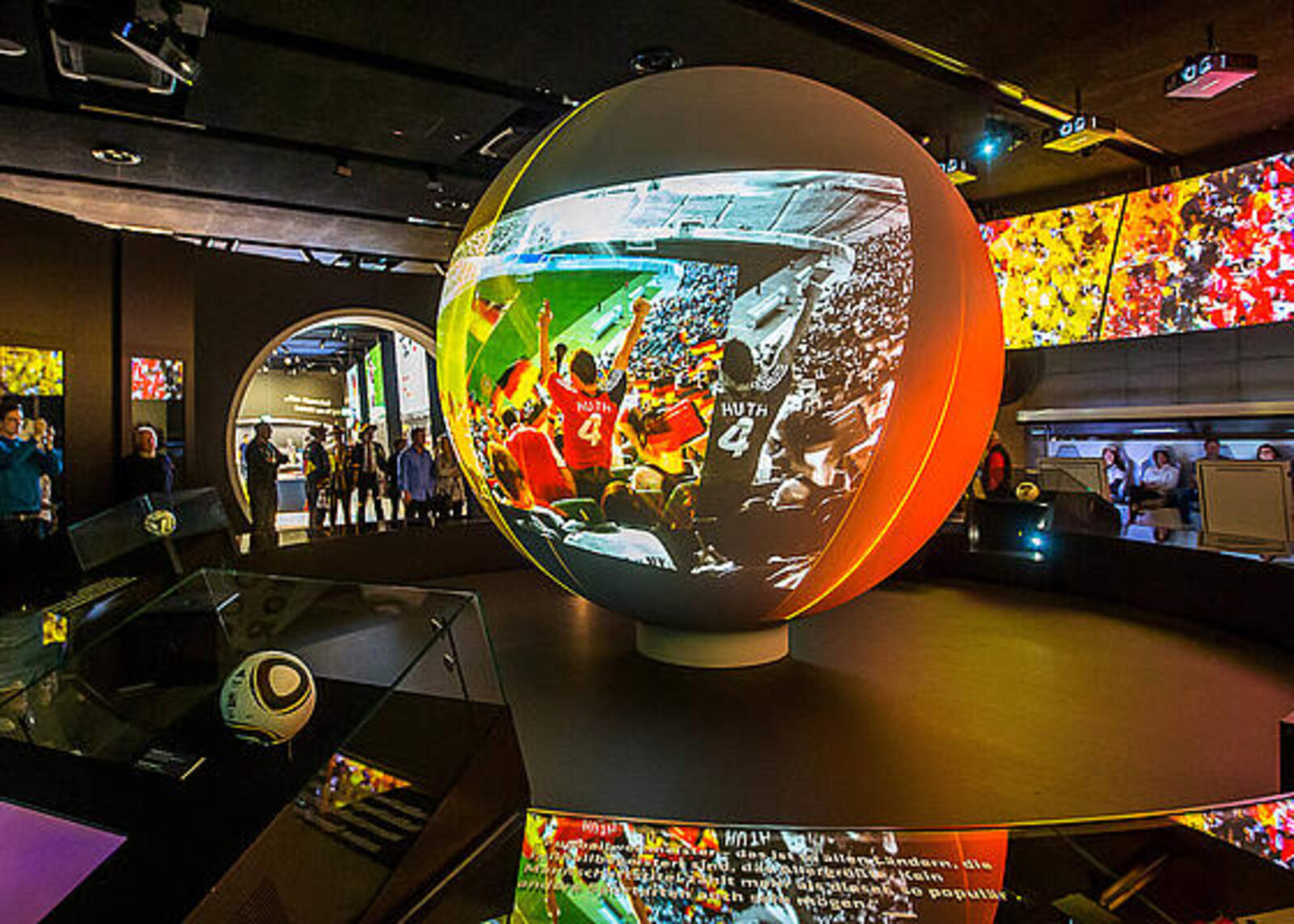
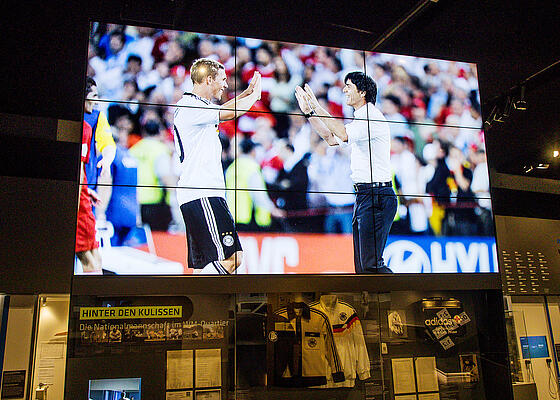
The German Football Museum in Dortmund is a world of experiences full of your own memories: out of the blue, you hear that Rahn is about to shoot from the background.
You relive Gerd Müller scoring from a turn, Olli Bierhoff netting the golden goal, a summer turning into a fairy tale, and Germany leading 5–0 against Brazil by half-time.
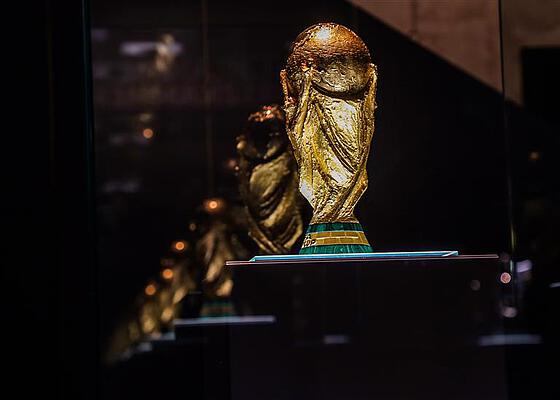
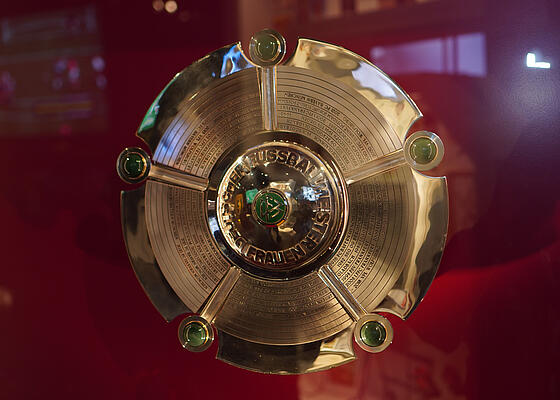
Emotions well up. Through a piece of fabric, marked by the traces of fierce tackles. Through sounds, voices and cheers. Through unforgettable moments on the pitch. Through boots still caked with grass. Through trophies that reflect the splendour of great footballing moments.
In the Miracle of Bern. In the treasure chamber. In the HALL OF FAME of German football. And in the arena of the Football Museum.
Location factor: value-added effects


The German Football Museum is a key factor in the long-term development of Dortmund and the Rhine-Ruhr region.
This is the conclusion reached by a recent study by the German Economic Institute for Tourism (dwif) in Munich, which examined the economic significance of the Football Museum on behalf of DORTMUNDtourismus.
The key findings of the study are as follows:
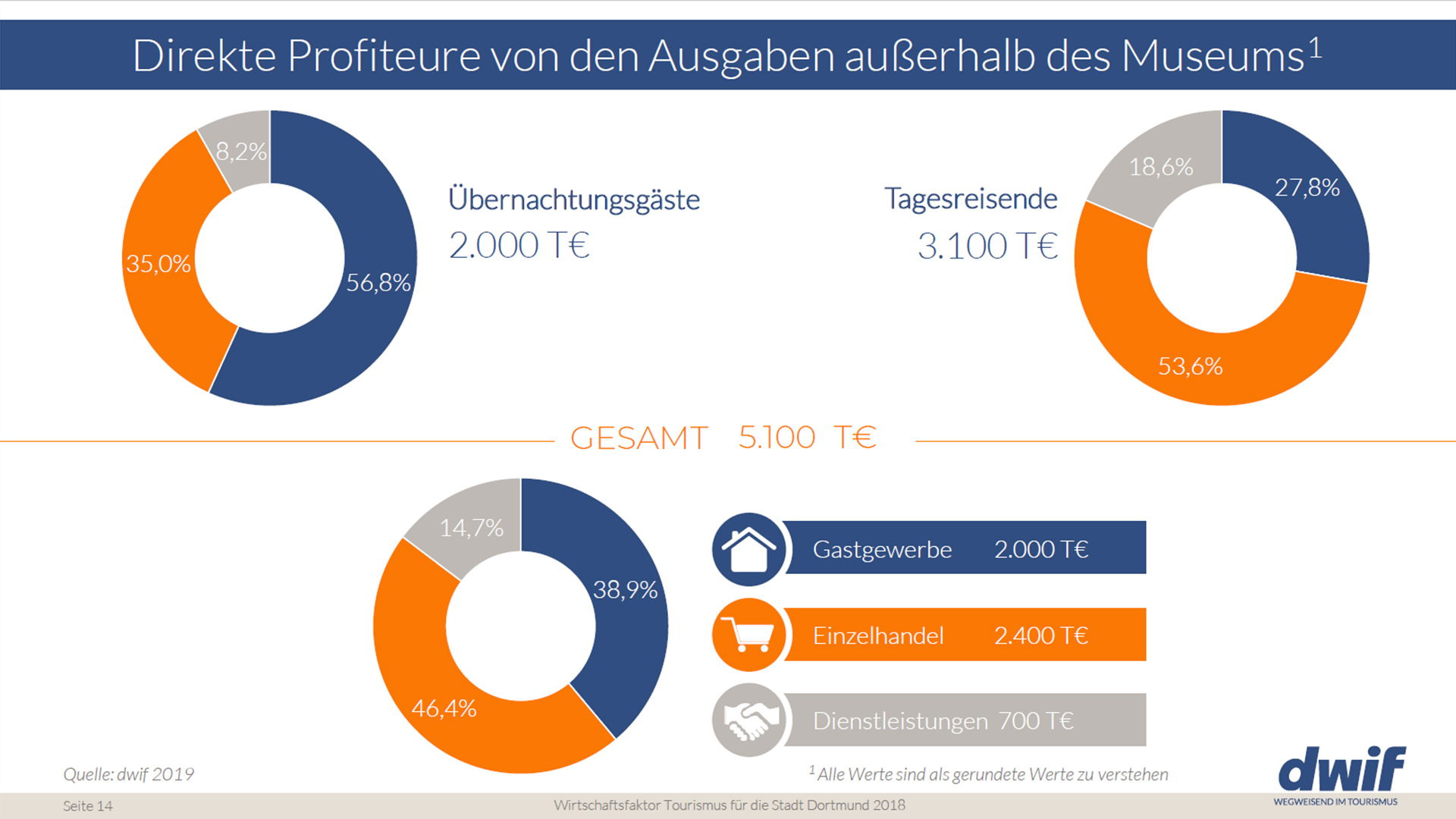
Visitors to the Football Museum generate an annual direct turnover of 5.1 million euros in Dortmund outside the museum itself. This equates to 25.50 euros per museum visitor. The hospitality industry, the retail sector and the service sector benefit in particular from these value chains.
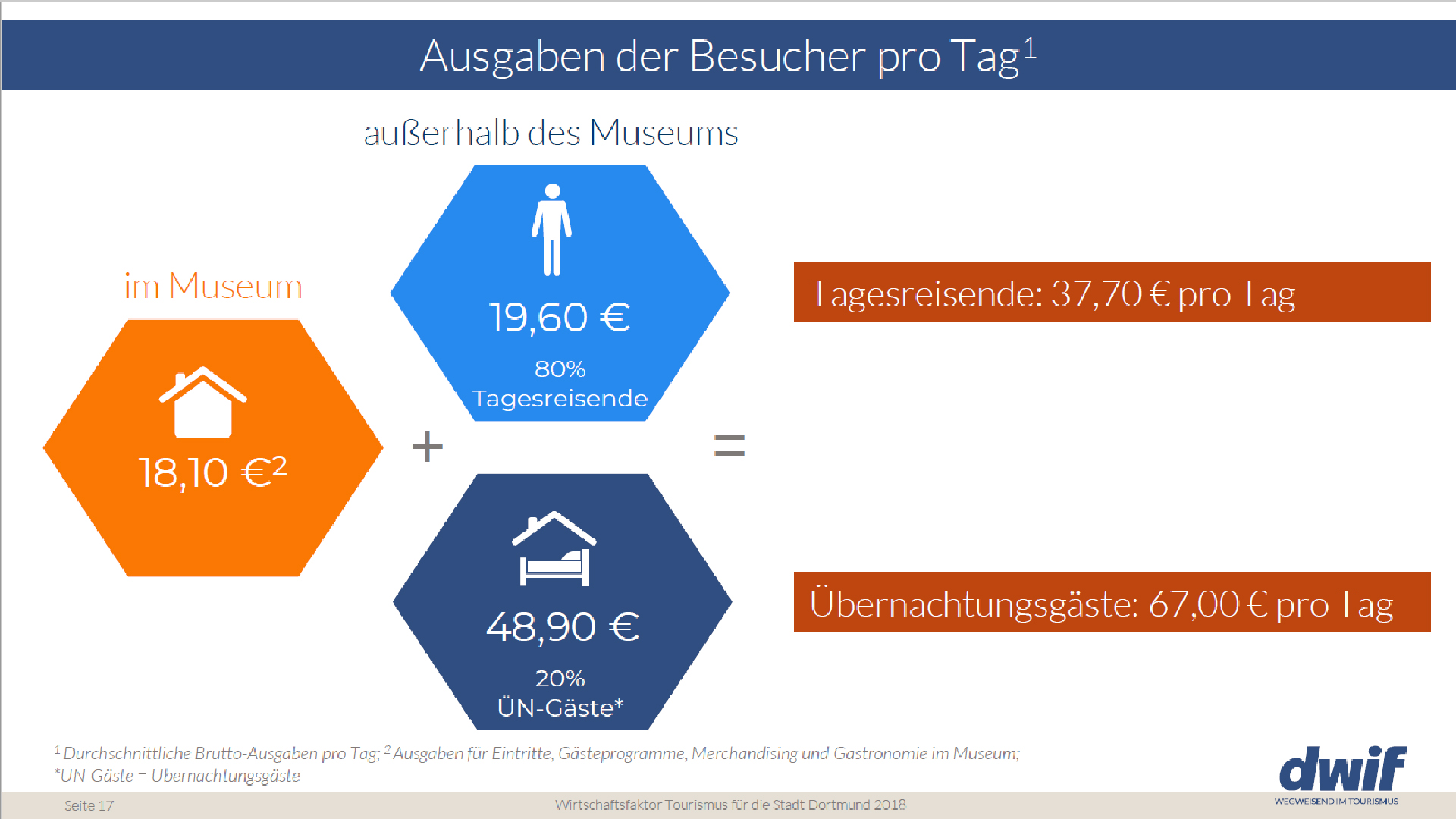
On average, day trippers spend 37.70 euros both inside and outside the museum. This is 6 per cent more than forecast by dwif in a study conducted prior to the museum’s opening. Overnight guests spend an average of 67.00 euros.
In total, the football museum’s operations generate annual direct and indirect turnover of 15.6 million euros for the regional economy.
Through the museum’s ongoing operations and visitors’ spending outside the museum, the public sector receives annual tax revenue of around 1.4 million euros from VAT (excluding input tax) and income tax alone. Added to this are, amongst other things, property tax and business rates.
The Football Museum purchases goods and services worth 6 million euros annually. More than one in five euros (22.7 per cent) spent on these goods and services goes to local businesses. More than half of the turnover from intermediate inputs (54.1 per cent) remains in North Rhine-Westphalia. The museum’s ongoing operations have created approximately 340 full-time jobs both within and outside the Football Museum.
Thanks to its media exposure, the German Football Museum has become a key marketing asset for the city of Dortmund and the region. The venue is promoted nationally and internationally through TV programmes such as the DFB Cup draw and the German Football Hall of Fame.
Location factor: Key economic indicators
The German Football Museum generates total annual revenue of around 6 million euros. This means that, in every financial year since it opened, the museum has managed to cover its operating costs through its core sources of income – ticketing, events, visitor programmes and sponsorship. The Football Museum’s cost recovery rate stands at more than 70 per cent. This is well above average when compared with museums and leisure facilities at both national and regional level.
Taking into account the location’s baseline tourism situation – the so-called overnight stay rate – the German Football Museum records outstanding turnover and visitor figures. This is the conclusion reached by a recent comparative study carried out by Themata Freizeit- und Erlebniswelten Service GmbH in Potsdam.
The key findings of the study are as follows:
- No other cultural or leisure facility in the region generates comparable admission revenue.
- Museums with higher admission revenues are found exclusively in locations with higher overnight stay rates – the key indicator used to assess tourism potential.
Any additional financial requirements arise solely from the costs associated with the property – known as depreciation – and necessary investments to maintain the value of the building and the exhibition. These costs are to be met, in accordance with the shareholders’ agreement, by the shareholders of the German Football Museum: the City of Dortmund and the German Football Association (DFB).
The corporate agreements concluded between the shareholders, which were approved by Dortmund City Council in 2009, essentially provide for the following:
- The DFB makes a higher shareholder contribution in the course of the construction work.
- The City of Dortmund bears a higher operational risk due to its unlimited obligation to cover losses during the museum’s operation.
To date, the DFB has provided €25.9 million in direct and indirect support for the Football Museum, whilst the City of Dortmund has contributed €8.7 million (as at December 2019).
Given the annual funding to be provided by the City of Dortmund in future – which corresponds to around 1 per cent of the city’s total budget for leisure and culture and is channelled directly into enhancing the appeal of the exhibition and the building – this results in a considerable return on investment for a cultural institution. The city invests around €5 in each visitor and receives €25 in added value outside the museum in return.
Location factor: Visitors and tourism development
With over 200,000 visitors a year, the German Football Museum is one of the most visited and commercially successful cultural and leisure venues in North Rhine-Westphalia. 25 per cent of visitors travel to Dortmund from catchment areas outside North Rhine-Westphalia. 10 per cent of visitors come from abroad; in 2019, they came from 124 countries.
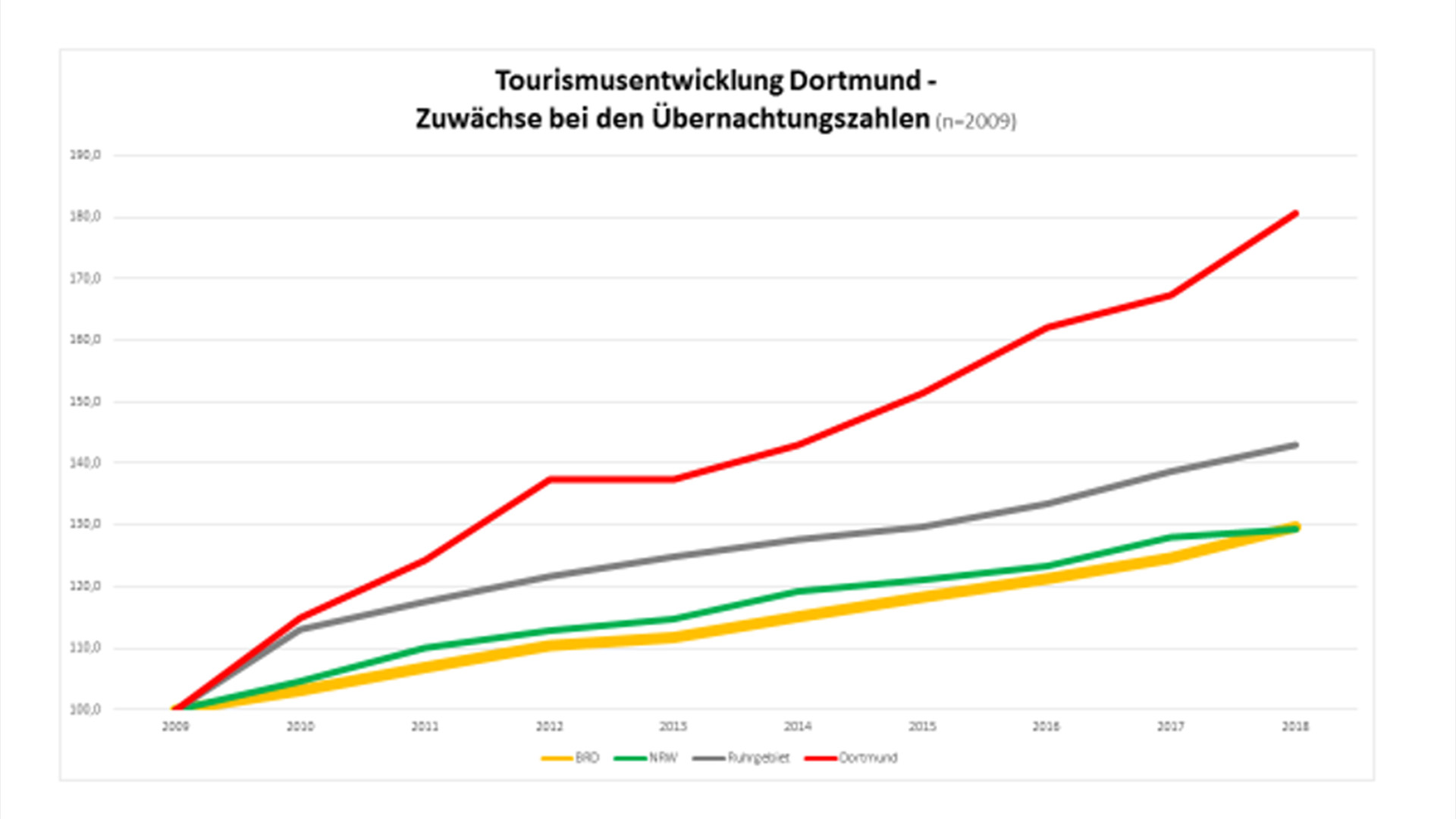
Through its visitors, the Football Museum contributes to the development of tourism in Dortmund. The increase in overnight stays in Dortmund (red line) is well above average compared with the national average (yellow), North Rhine-Westphalia (green) and the Ruhr region (grey).
Visitors rate the Football Museum’s offerings above average. On Google and TripAdvisor, they give it 4.5 out of 5 stars, and on Facebook 4.7 out of 5 stars. The average time spent in the exhibition is 3 hours. In addition to the permanent exhibition, reviews also cover the ‘ANSTOSS’ cultural programme, the educational and outreach programme for schools, the catering facilities and the event spaces at the German Football Museum.
Organisation
The DFB Foundation German Football Museum gGmbH, based at Königswall 21 in Dortmund, is responsible for the German Football Museum. The managing directors are Manuel Neukirchner (Director) and Tobias Moos (Commercial Director). The shareholders’ meeting of the non-profit limited company consists, in equal parts, of representatives from the DFB and the City of Dortmund.
Director of the German Football Museum

Manuel Neukirchner is Director of the German Football Museum and Chairman of the Management Board of the DFB-Stiftung Deutsches Fußballmuseum gGmbH. As founding director, he was responsible from 2009 to 2015 for the content, scenography and construction of the German Football Museum in Dortmund and, with the most recent major museum opening in North Rhine-Westphalia, set new standards for experience-oriented and multimedia exhibition design. As part of his museum work, he publishes books and articles on cultural-historical topics.
Neukirchner studied at the University of Wuppertal, graduating with a ‘Magister Artium’ (M.A.) in General Literary Studies, Modern German Literary History and History. During and after his studies, he worked as a freelance print and radio journalist, specialising in cultural and sports journalism. This was followed by various professional roles between 1997 and 2009, including as press officer for Rot-Weiß Essen; personal assistant and office manager to DFB presidents Egidius Braun and Gerhard Mayer-Vorfelder; head of corporate communications and investor relations at Borussia Dortmund; Head of Press for the 2006 World Cup Organising Committee for the Dortmund venue and Head of Media Centre West, and executive board member of the DFB Sepp Herberger Foundation (Managing Director) and the DFB Egidius Braun Foundation (Deputy Managing Director).
Books published for the German Football Museum as editor and author: More Than Just a Game – The Book on the German Football Museum (2015), Wembley 1966 – The Myth in Snapshots (2016), ‘Treasures from the German Football Museum’ (2017), ‘Herberger’s World of Books – The Undiscovered Sides of the Legendary Manager’ (2017), ‘Commemorating the Holocaust – Football and Remembrance’ (2018), A Letter from the Boss – Herberger’s Letters to the World Champions (2019), Heart & Pitch – 11 Short Stories about Football (2019), Hall of Fame – Germany’s Greatest Footballers (2019)
History: The journey to the Football Museum from 2006 to 2015
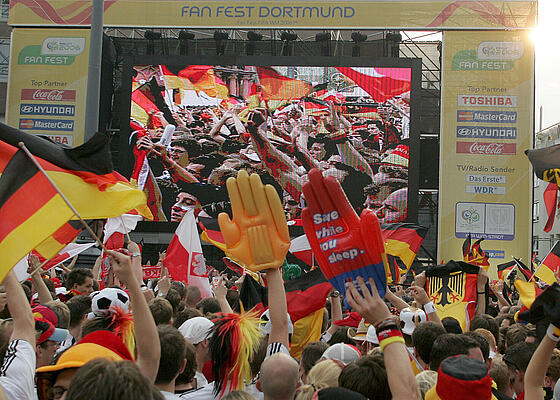
During the 2006 World Cup on home soil, football united the nation, as seen here at the fan festival in Dortmund. Nine years later, the National Football Museum stands in the Ruhr region.
2006: A summer fairy tale in Dortmund
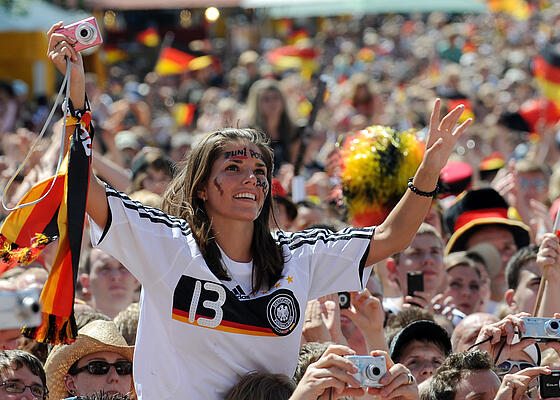
The twelve host cities of the 2006 World Cup and two unsolicited bids from Karlsruhe and Oberhausen are taking part in the site selection process for the German Football Museum.
2007: Call for tenders for a site
The state of North Rhine-Westphalia is providing funding for the creation of the German Football Museum.
2008: Investment by the State of North Rhine-Westphalia
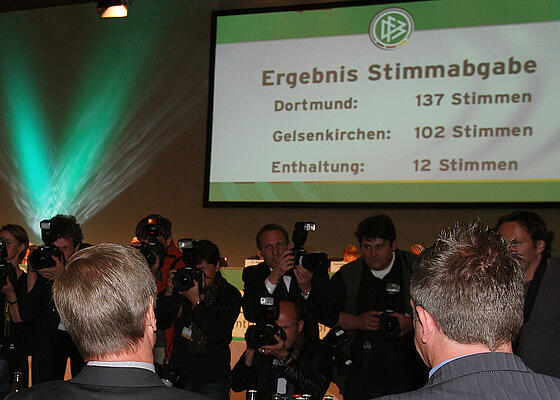
On 24 April 2009, at an extraordinary DFB Bundestag, 137 delegates voted in favour of building the German Football Museum in Dortmund, whilst 102 voted for Gelsenkirchen, with twelve abstentions.
2009: A majority for Dortmund
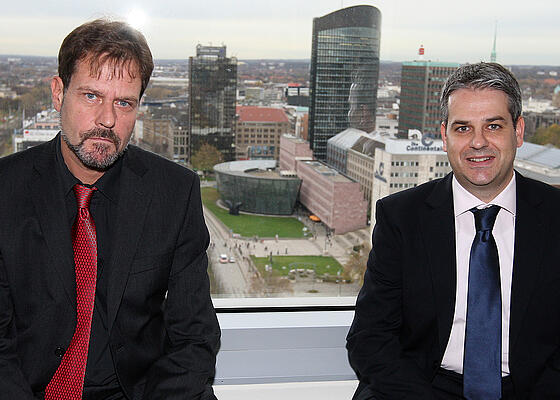
On 1 September, the project company will be established by its shareholders, the DFB and the City of Dortmund. Michael Kesseler and Manuel Neukirchner will be appointed as managing directors.
2009: Establishment of the project company
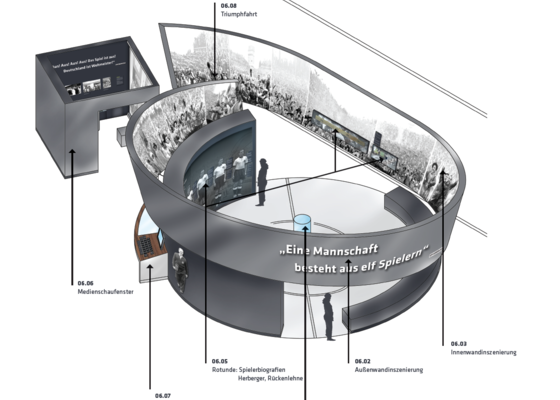
The DFB Football Museum Foundation gGmbH has commissioned TRIAD Berlin, as the planning consultancy, to undertake the scenographic and design work for the German Football Museum.
2010: Presentation of the exhibition concept
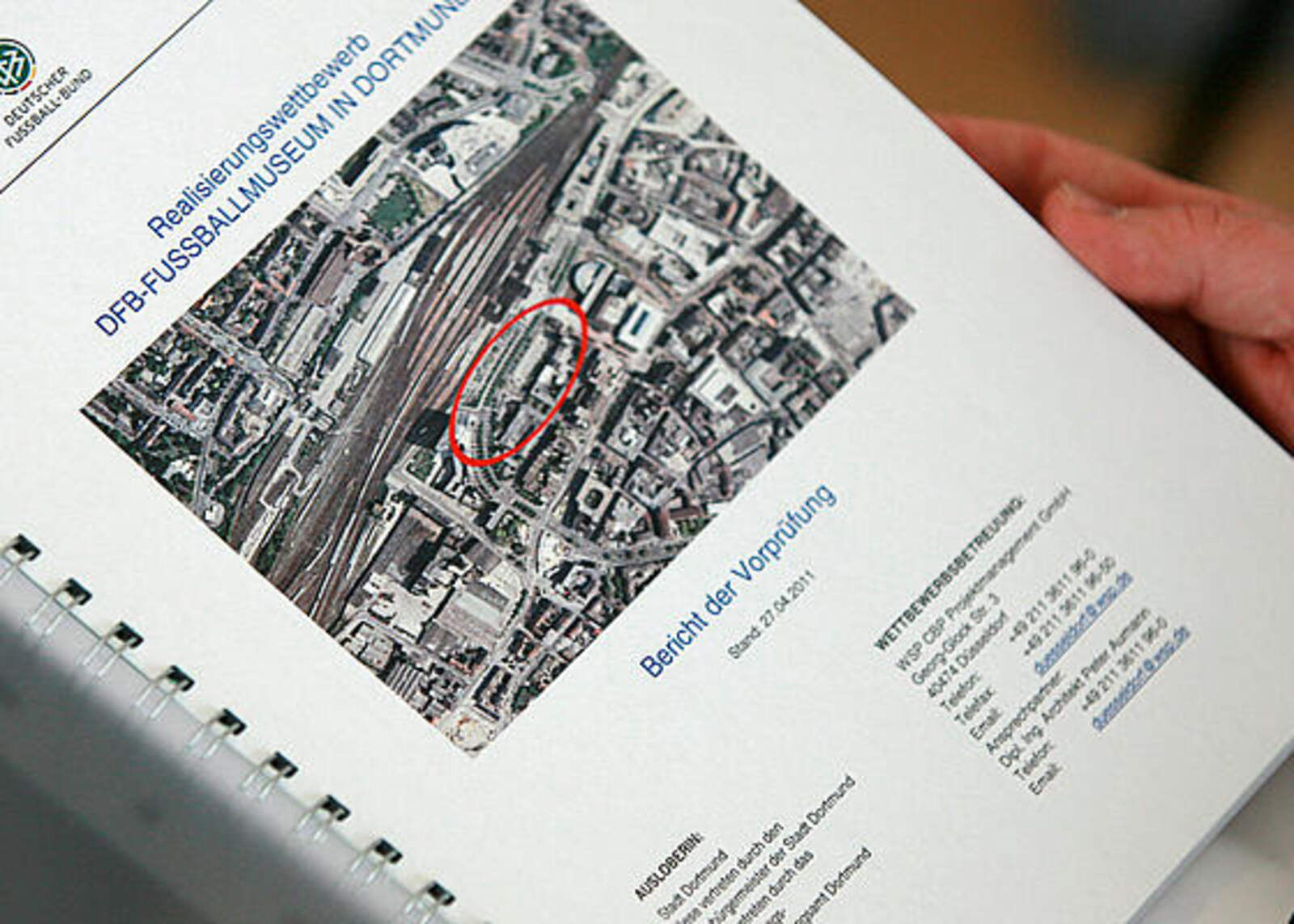
HPP has emerged as the winner from among the 24 entrants in the architectural competition. The Düsseldorf-based firm has been commissioned to carry out the structural design and site planning for its award-winning design.
2011: Architectural competition
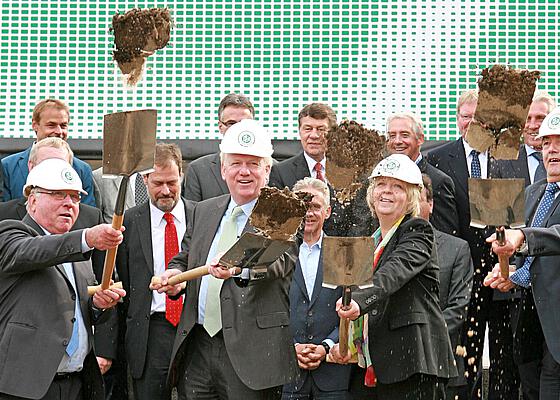
Construction of the German Football Museum began in September 2012, attended by numerous prominent figures. Uwe Seeler, the DFB’s honorary captain, broke ground.
2012: Ground-breaking ceremony
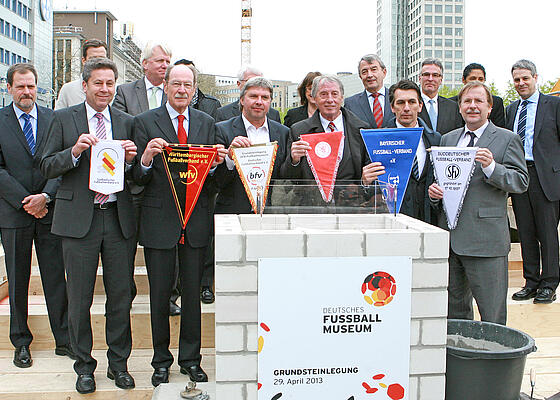
At the foundation-laying ceremony on 29 April 2013, the entire football family presented pennants from the DFB, the League Association and all DFB regional and state associations as a token of their support.
2013: Laying of the foundation stone
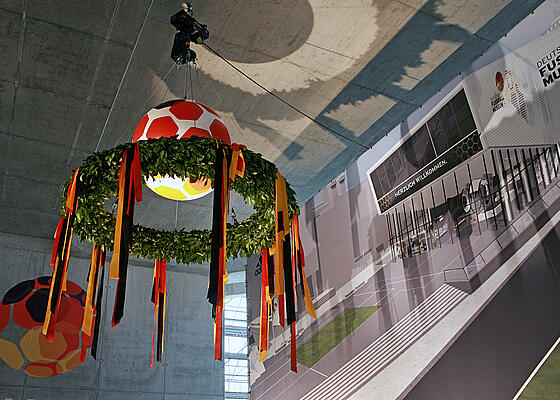
The topping-out ceremony on 4 April 2014 marked the start of the final push towards the building’s completion. More than 200 guests attended the ceremony.
2014: Topping-out ceremony
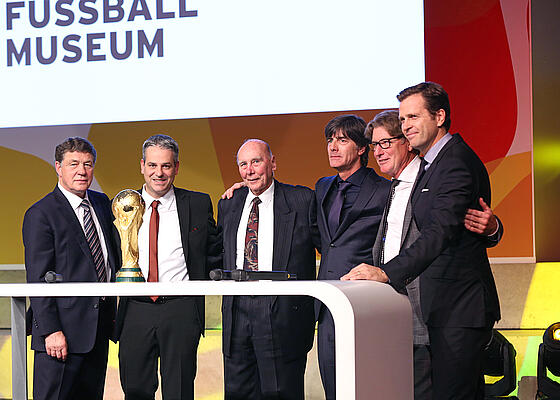
On 23 October, the German Football Museum will kick off a three-day programme of celebrations for the opening weekend with a gala attended by Hannelore Kraft, Minister-President of North Rhine-Westphalia.
2015: Grand opening
Highlights since the opening of the German Football Museum
In November 2015, a small special exhibition commemorates ‘25 years of German football unity’. A total of eleven themed displays shed light on the sporting events of the years of political transition, look back at inter-German football matches during the era of division, and illustrate the development of football in reunified Germany over the past two and a half decades.
In July 2016, as part of the opening of the special exhibition ‘50 Years of Wembley – The Myth in Snapshots’, museum director Manuel Neukirchner welcomed 14 players from the 1966 World Cup runners-up squad. Alongside a look at the Wembley goal from various perspectives and an artistic media installation, the special exhibition centres on previously unpublished photographs from the ‘Final of the Century’.
In February 2017, at the German Football Museum, the then BVB manager Thomas Tuchel and Stanford professor Hans-Ulrich Gumbrecht engage in a discussion on football and aesthetics. The discussion, initiated by the DFB Cultural Foundation, offers the audience in the multifunctional arena top-class entertainment and a unique perspective that looks beyond the current football scene.
In March 2016 and April 2017, the German Football Museum hosted the presentation of the DFB Integration Award.
In March 2017, the DFB used the premises of the German Football Museum for the press conferences ahead of Lukas Podolski’s farewell match against England.
In April 2017, the special exhibition “Herberger’s World of Books – the undiscovered pages of the legendary manager” opens and goes on to become a huge hit with the public at its subsequent venues in Berlin and Mannheim. Through 50 items from Herberger’s private estate and selected works from his collection of around 1,500 books, the life and work of the 1954 World Cup-winning manager are presented from an unusual perspective.
Since June 2017, the DFB Cup draws have been held regularly in the museum’s multifunctional arena in front of a live audience. The ARD programme ‘Sportschau’ broadcasts the events live.
In October 2017, the play ‘Juller’ by author Jörg Menke-Peitzmeyer, which was staged at the Theater der Jungen Welt in Leipzig under the direction of Jürgen Zielinski, celebrated an impressive guest performance premiere at the German Football Museum.
In January 2018, on the occasion of International Holocaust Remembrance Day, the German Football Museum commemorated the victims of the Nazi genocide in the presence of Israel’s Ambassador Jeremy Issacharoff and Bundestag Vice-President Claudia Roth.
In 2020 and 2021, the museum adapted to the challenges posed by the COVID-19 pandemic and developed digital initiatives to ensure that football history could continue to be experienced. In addition, further outstanding figures were inducted into the German Football Hall of Fame, including Berti Vogts, Andreas Möller, Michael Ballack, Klaus Fischer and Rudi Völler in 2020, and Jürgen Kohler, Horst Eckel, Miroslav Klose and Joachim Streich in 2021.
As life returned to normal following the pandemic, the museum set a new visitor record in 2023 with 254,000 guests, representing a 10 per cent increase compared with the pre-pandemic year of 2019. Young people in particular were increasingly drawn to the exhibitions, and the number of school pupils taking part in the educational and outreach programme quadrupled between 2019 and 2023.
The year 2024, with 289,000 visitors, marked the most successful year in the history of the German Football Museum. UEFA EURO 2024 in Germany contributed significantly to this success. During the European Football Championship alone, around 40,000 people visited the museum’s exhibition spaces. On 25 June 2024, the day of the group stage match between France and Poland, a new daily record was set with 2,715 visitors.
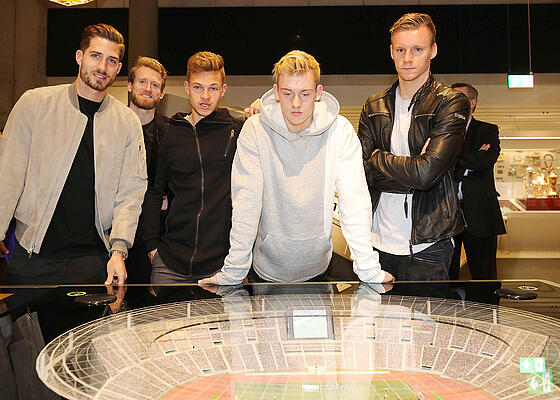
Prominent guests in 2024 included Philipp Lahm (Tournament Director of UEFA EURO 2024), Wolfgang Overath, Pierre Littbarski and Kevin Großkreutz (World Cup winners), Peter Schilling (singer), Peter Lohmeyer (actor), Guido Cantz and Atze Schröder (comedians), as well as Bärbel Bas, President of the Bundestag, and Claudia Roth, Minister of State for Culture.
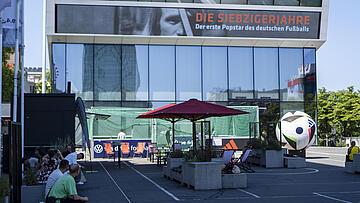
On 8 April 2025, the German Football Museum opened the special exhibition ‘Netzer – the Seventies’. The exhibition highlights Günter Netzer’s skilful playing style and his flamboyant lifestyle, which made him the first major pop star of German football. The opening attracted numerous prominent guests, including former team-mates and figures from the worlds of sport and culture.
Unique architecture in the Ruhr region

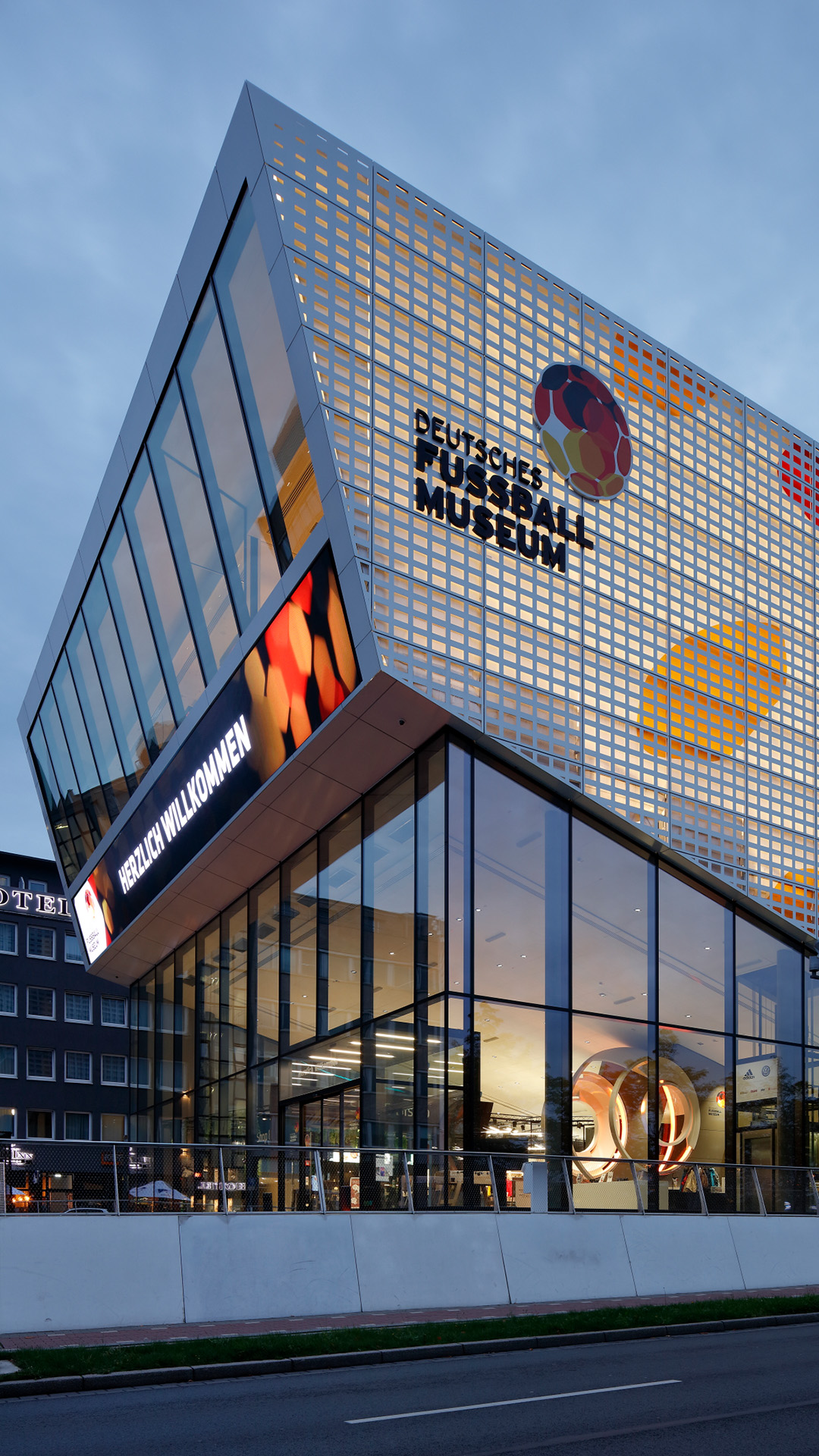
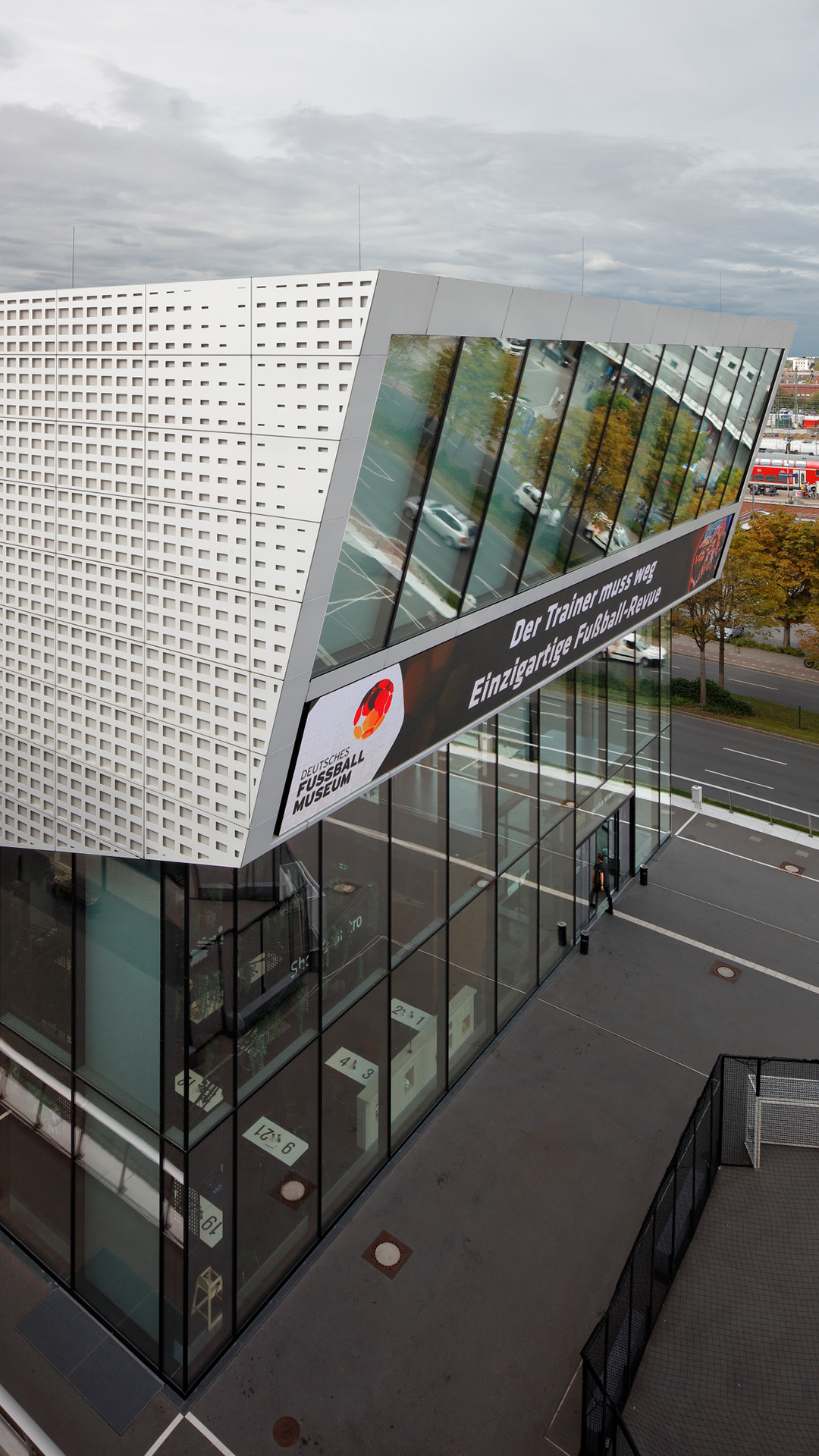

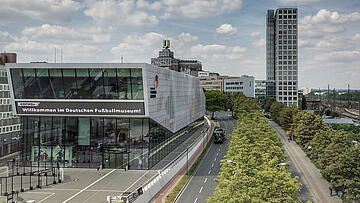
Standing as a striking, freestanding contrast to the neighbouring circular building of the City and State Library, the German Football Museum, together with the Dortmunder U industrial monument and the Konzerthaus, defines Dortmund’s arts and culture mile in a unique urban setting directly next to the main railway station.
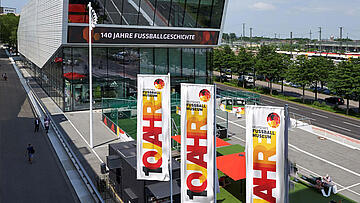
Three key elements define its architectural appearance: the floating structure, the continuous public space and the ‘podium’. The latter is particularly significant in terms of urban planning and should be understood as an inviting gesture. The plateau levels out the varying ground levels and enables barrier-free access.
The façade of the new building also conveys that this is the home of Germany’s most popular sport. The theme of football is depicted via a perforated, LED-backlit light-alloy façade: the rectangular perforations coalesce to form the motif of a classic football. The space behind the façade is used to display interchangeable banner graphics. At the front, an LED media façade completes the building’s experience-oriented external impact.
The form of the building’s volume – a cantilevered, wedge-shaped box – has established a new urban landmark for Dortmund: With its glazed ground floor and basement – which seem to embrace the urban space – the museum presents itself as a public space, above which two exhibition floors rise.
The open architectural language and the high degree of flexibility and functionality for the exhibition area are defining characteristics of the German Football Museum. The building’s structure and spatial layout enable a diverse museum experience and reflect the fundamental principle that content and architecture form a unified whole.
Visitors enter the building via the entrance area facing the forecourt, which continues the urban space indoors as a series of column-free rooms. Passing the shop and bistro and the ticket office, visitors proceed from the foyer via an escalator to the upper level, which houses the permanent exhibition across two floors. The so-called ‘Arena’ in the basement is used for temporary exhibitions and events, and catering facilities are provided there accordingly.
Reviews, awards, press coverage
Visitors to our permanent exhibition rate the German Football Museum above average. A rating of 4.5 out of 5 stars on Google and TripAdvisor, and 4.7 out of 5 stars on Facebook, speaks for itself. These public reviews are consistent with the feedback we receive from our guests through the satisfaction surveys we conduct regularly.
The German Football Museum has been awarded a certificate for verified accessibility. Regular nominations and shortlistings – including for the European Museum of the Year Award (EMYA), the European Museum Academy (EMA) Award and the Location Award – are testament to our visitor-focused approach.
There is considerable interest from national and international media. The New York Times has reported on the exhibition. Special exhibitions are frequently featured in publications such as the Süddeutsche Zeitung and the Frankfurter Allgemeine Zeitung. The German football HALL OF FAME is covered by publications such as BILD and the Tagesspiegel. The DFB Cup draws, held regularly at the German Football Museum (broadcast live on ARD), ensure national coverage. WAZ, Welt and kicker regularly report from the German Football Museum.
When are you coming? How many of you are there?