EN
EN
 DE
DE

Press releases about the German Football Museum
We are delighted that you are interested in our museum. Here you will find contact details, photos and logos, press releases, and facts and figures about the German Football Museum. If you require video footage, please do not hesitate to contact us by email.
The German Football Museum is also available as a venue for research and filming. We’d be delighted to support you with your research by providing a research pass. To process your accreditation, please email us with the following details: client, nature and scope of the research, and your preferred date. If you’re interested in using the Football Museum as a filming location or backdrop, please contact us directly.
Admission for journalists (without a research assignment): Upon presentation of their press card (DJV, dju, BDZV, VDZ, Freelens, VDS), journalists are entitled to reduced-rate admission to the German Football Museum. The reduced admission price does not apply to family members or other accompanying persons.
Do you have any questions? Please do not hesitate to contact us – we’ll be happy to help.
Contact: Press enquiries


Press images and logos
The images and logos published here may be used free of charge for the purposes of public relations and media relations by the German Football Museum. Please ensure that the source is credited when publishing. If in doubt, please contact us in writing before publication.





Facts and figures about the German Football Museum
Here, journalists will find a summary of information about our organisation.
History
As early as the German Football Association’s 100th anniversary in 2000, the association brought to life an ambitious exhibition concept at the Gasometer in Oberhausen. The exhibition ‘Der Ball ist rund’ (The Ball is Round) attracted more than 200,000 visitors within five months and underlined the importance of football as a cultural asset of society.
Following the successful 2006 FIFA World Cup in Germany, the time was right for the DFB to bring the idea of a permanent exhibition to life. The desire to present memories of the home World Cup in an engaging way was the deciding factor in creating an interactive experience dedicated to German football history.
The twelve host cities of the 2006 World Cup, along with two unsolicited bids from Karlsruhe and Oberhausen, competed for the right to host the venue. In its decision in favour of the Ruhr region, the DFB Executive Committee recognised the special efforts made by the state of North Rhine-Westphalia in the construction and refurbishment of stadiums for the 2006 World Cup. Following a vote at an extraordinary DFB Federal Assembly in 2009, the German Football Museum finally found its home in Dortmund. This is a region with a great passion for football, home to a multitude of traditional clubs and people who have shaped the sport since its very beginnings.
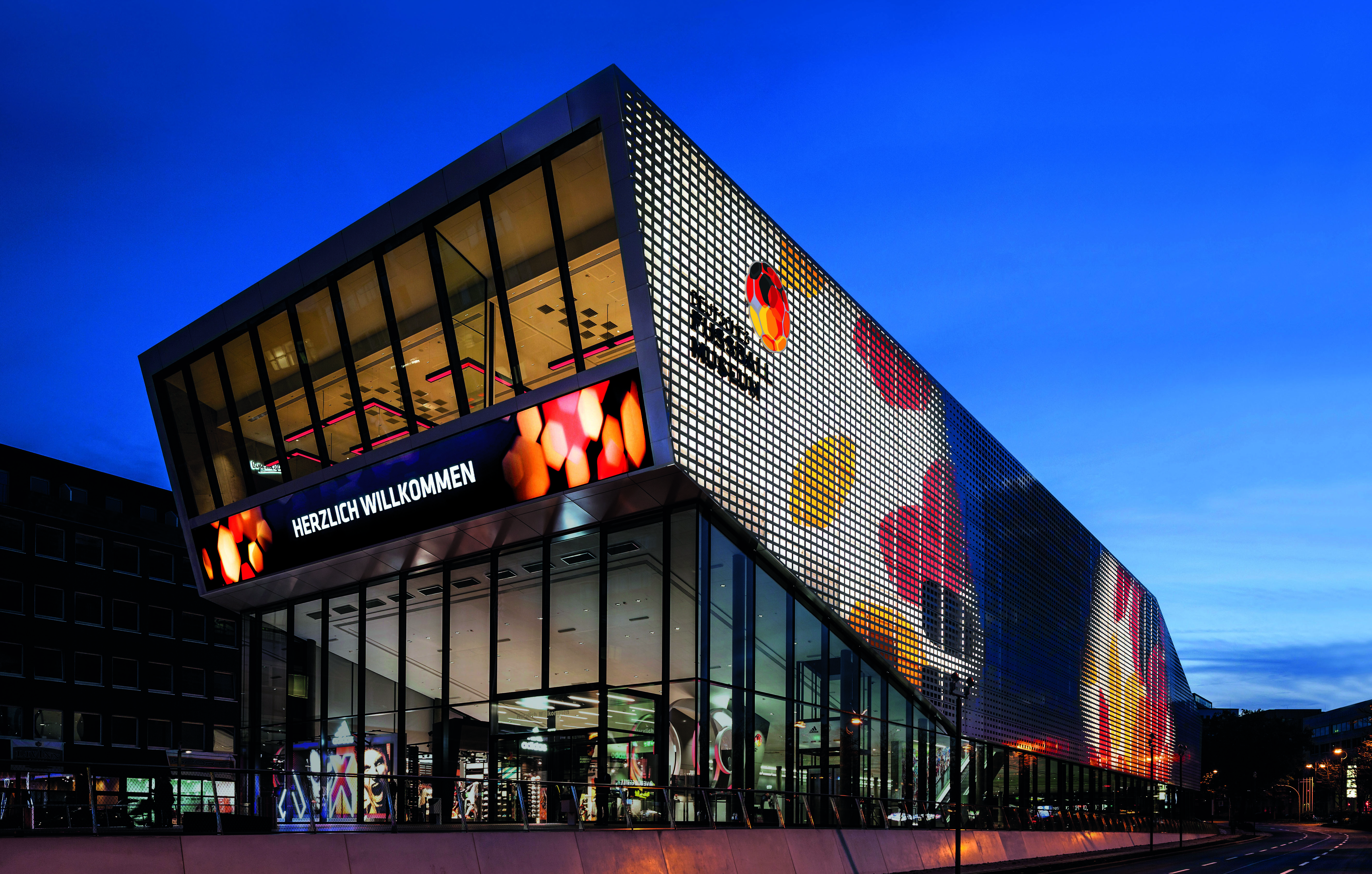
Following a six-year planning and construction phase, the German Football Museum opened in October 2015 in a central city-centre location and immediately became one of the most visited museums in the Rhine-Ruhr region.
More than just an exhibition
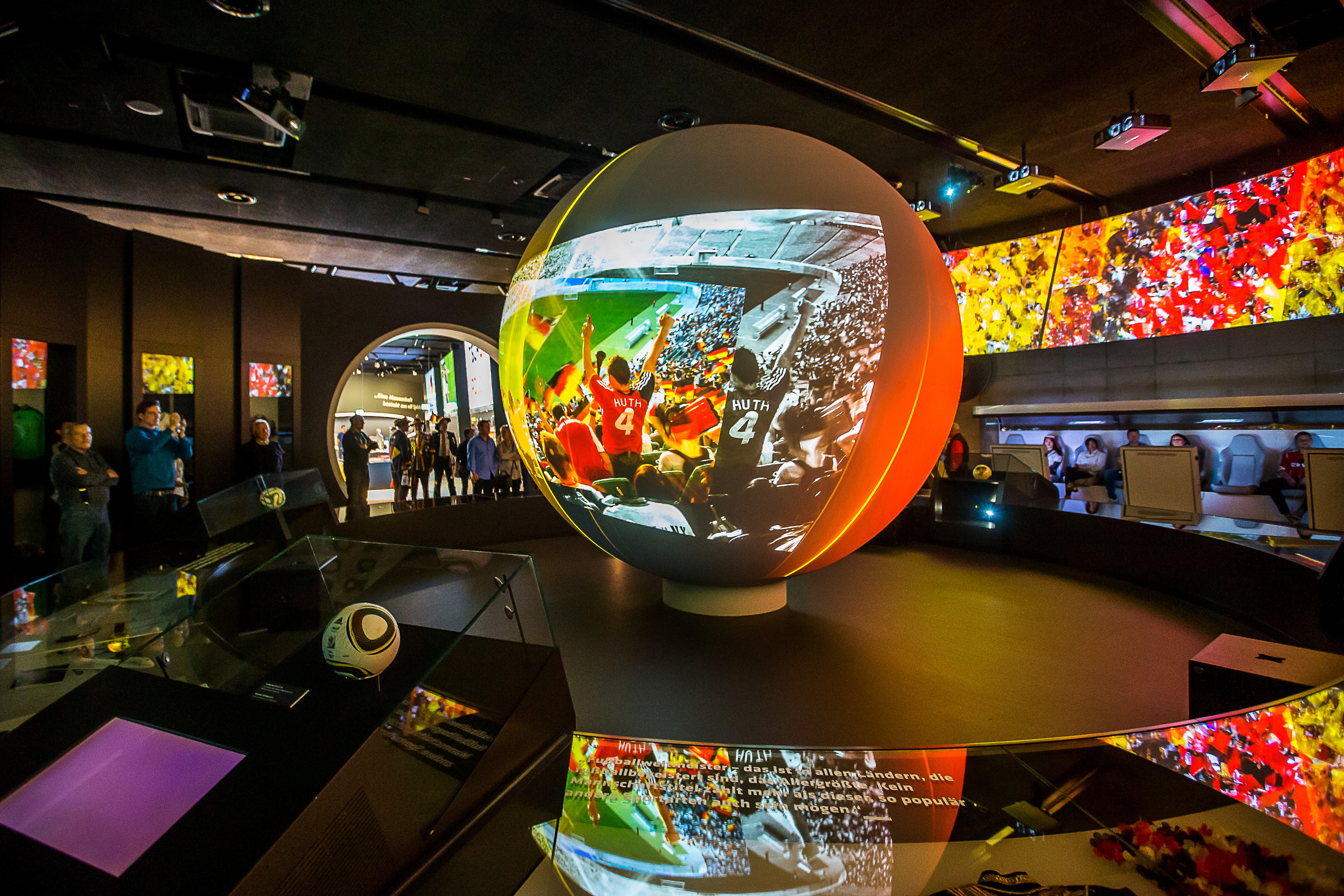
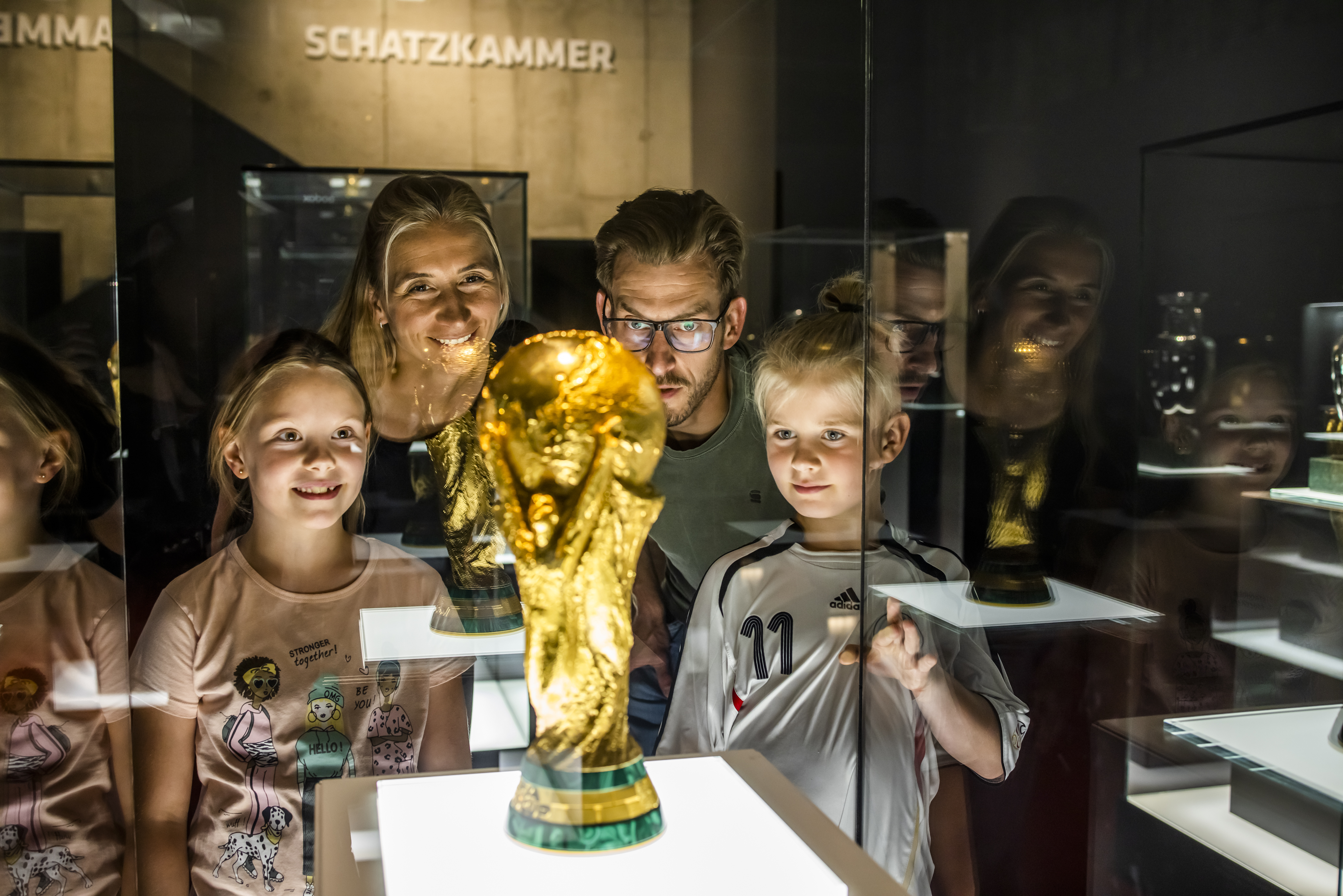
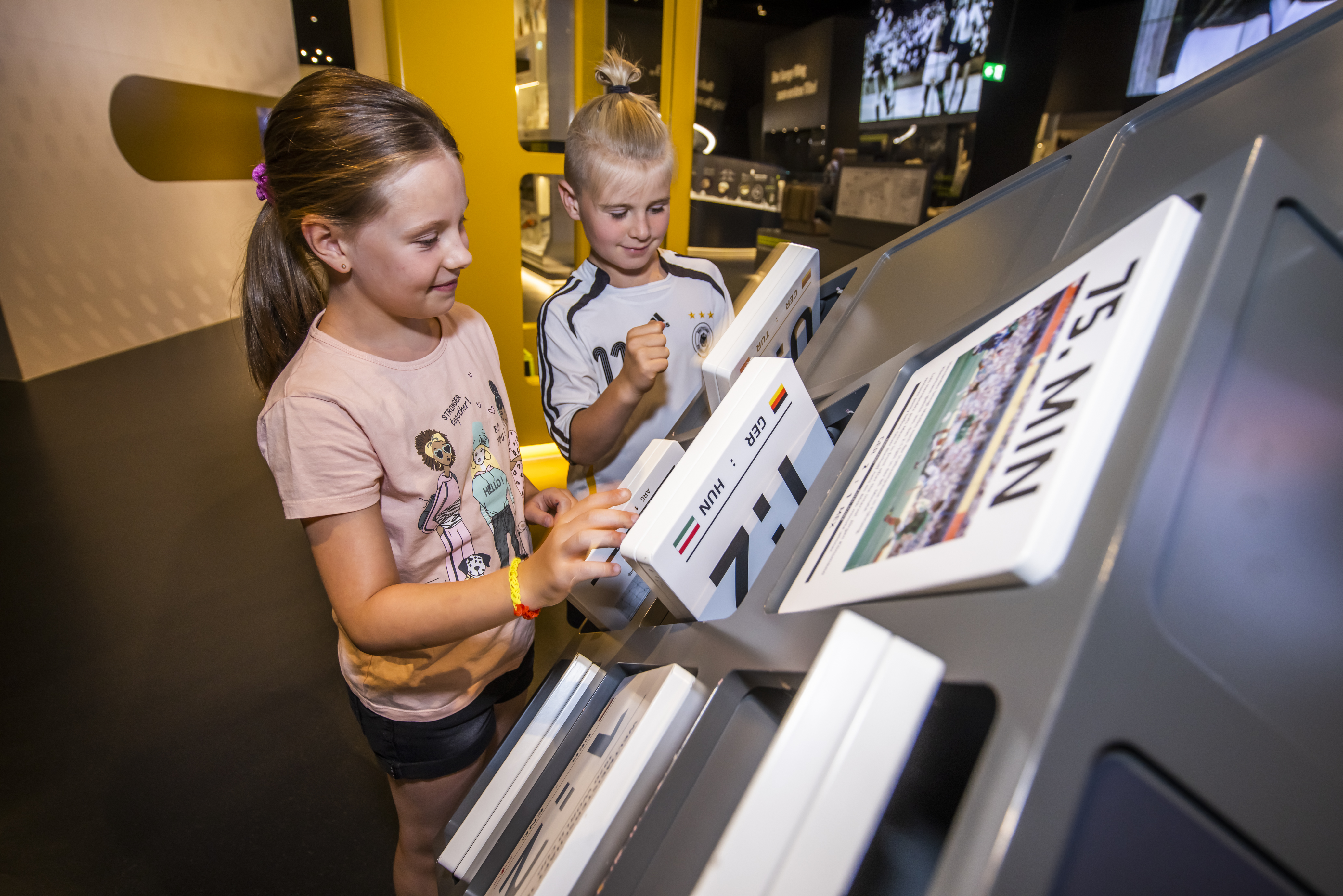
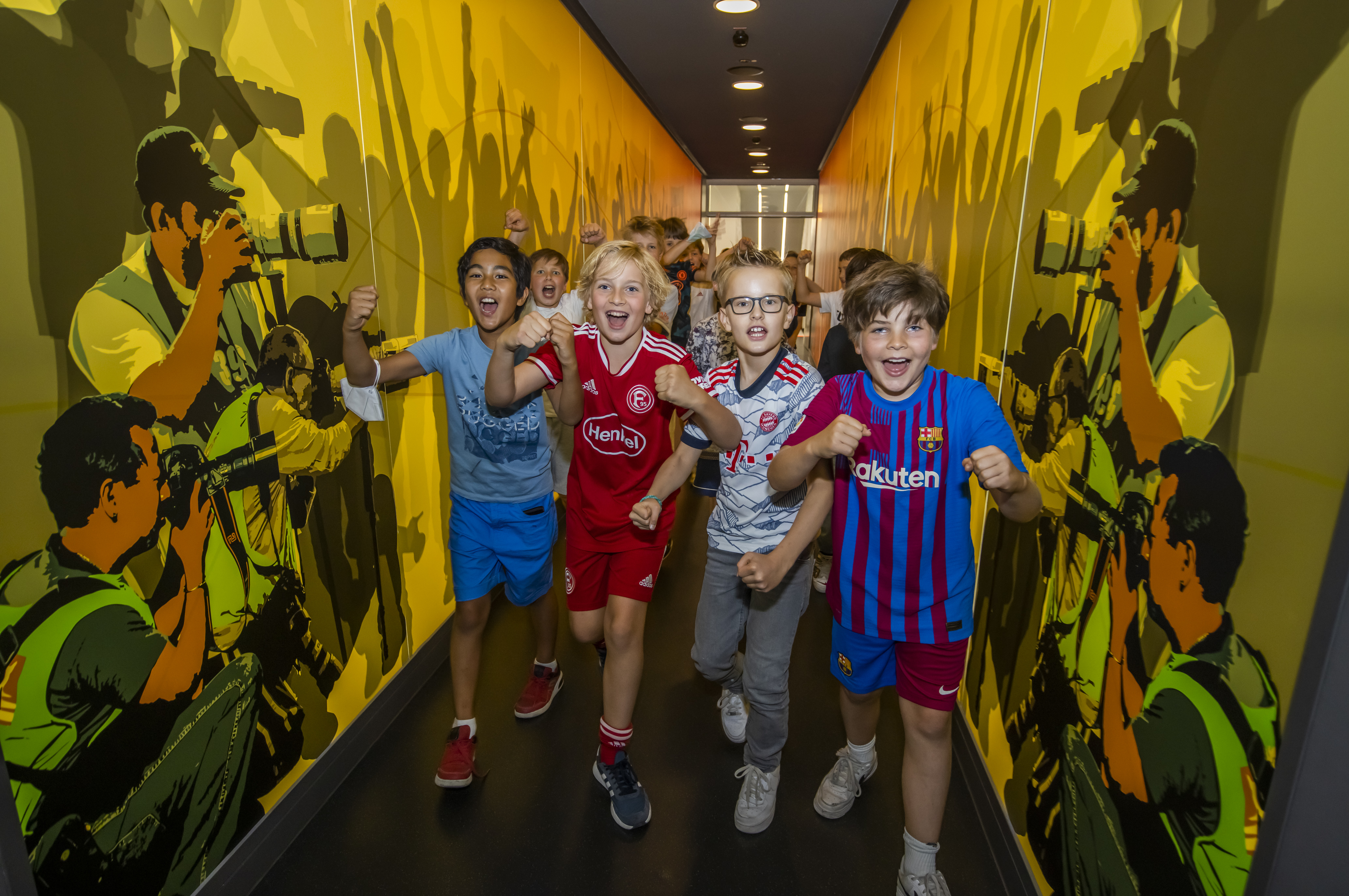
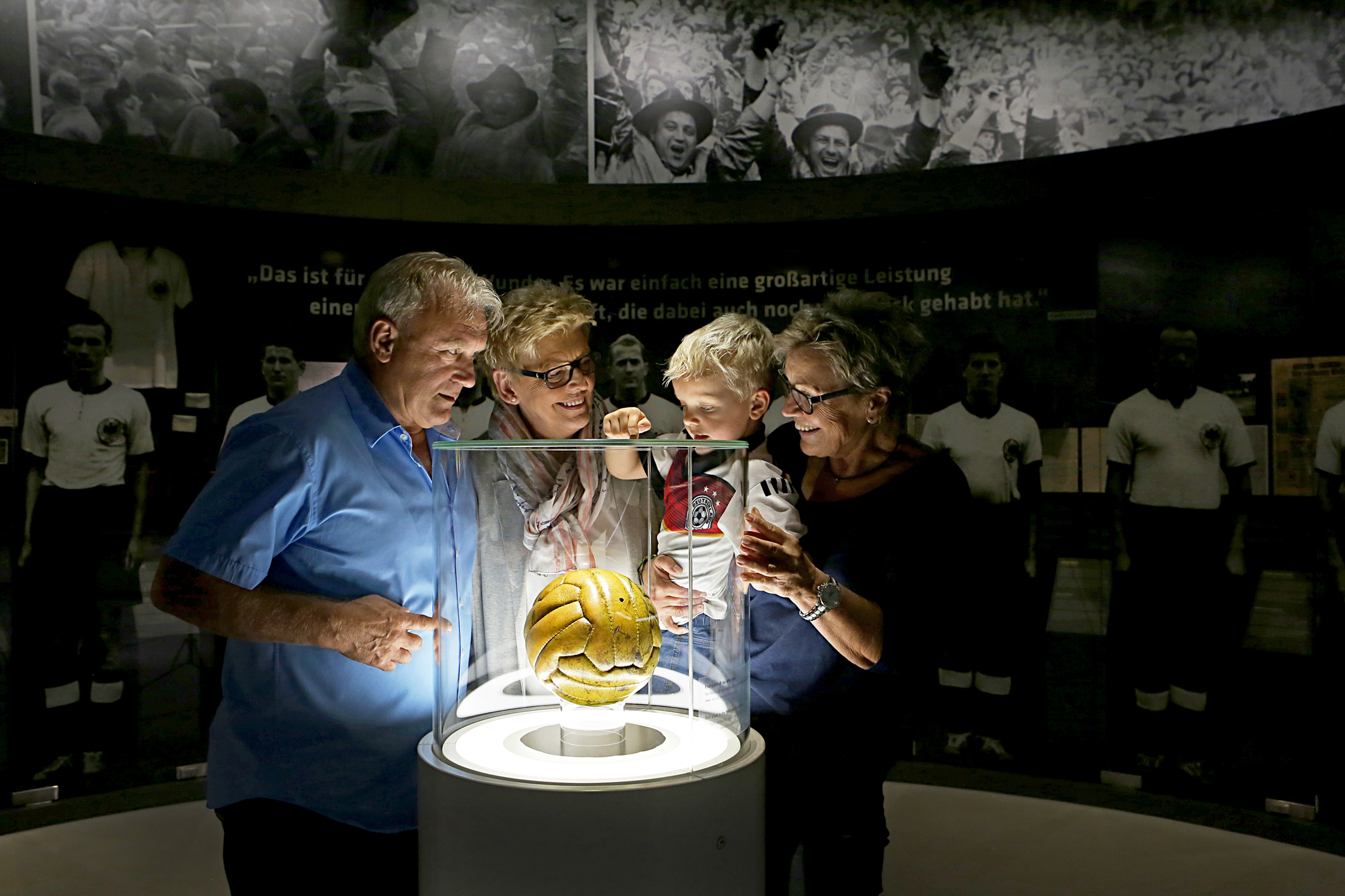
Around 1,600 exhibits and a total of 25 hours of film footage are waiting to be discovered on the interactive, multimedia tour. The 3D cinema, the treasure chamber housing the most significant trophies, a press box and much more are sure to set fans’ hearts racing. Visitors move from one spine-tingling experience, one great football moment, to the next. Each one can be experienced in all its emotional intensity.
Furthermore, guests encounter chapters in 140 years of football history that give pause for thought and not only evoke memories but keep them alive: football in times of war, persecution, betrayal and bribery – these too form part of a comprehensive examination of the sport. Football from different angles. With a perspective that looks beyond the obvious. True to the motto: think along, get caught up in the excitement, join in the game.
The exhibition experience concludes with some active relaxation at the interactive football modules in the arena on the museum’s lower ground floor. Those who prefer to take it easier can enjoy homemade delicacies in the catering area and sit back and relax. The German Football Museum in Dortmund, in the heart of the Ruhr region: an ideal day-out destination for young and old alike.
Furthermore, the German Football Museum serves as an extracurricular learning venue. Here, hands-on experience and discovery combine to create a truly special museum experience. With various thematic focuses and specially prepared teaching materials, pupils learn – with the support of museum educators – to explore the many facets of football in depth.
Culture and Events Programme: ANSTOSS
Football shapes countless lives across all social classes and generations and is at the heart of historical, artistic and political developments. The German Football Museum embraces this diversity and takes it a step further: as part of the ANSTOSS programme, events centred on football culture and history take place regularly. The various formats range from traditional evenings to ‘Soccer Slams’, ‘Tactics Talks’ and film screenings. In this way, the museum offers a vibrant forum for all football enthusiasts and actively participates in the debate surrounding the sport.
Event venue
The German Football Museum is a multifunctional exhibition centre. The premises are equipped in such a way that several areas can be used as event spaces. Whether it’s an exclusive conference, an atmospheric reception or a classic gala evening – this modern venue is suitable for events of all sizes, with room sizes ranging from 35 to 700 m² and a capacity of up to 700 people.
Address: German Football Museum, Platz der Deutschen Einheit 1, 44137 Dortmund
Information
Director: Manuel Neukirchner