EN
EN
 DE
DE


Women are making football history
5 April 2011 to 21 August 2011
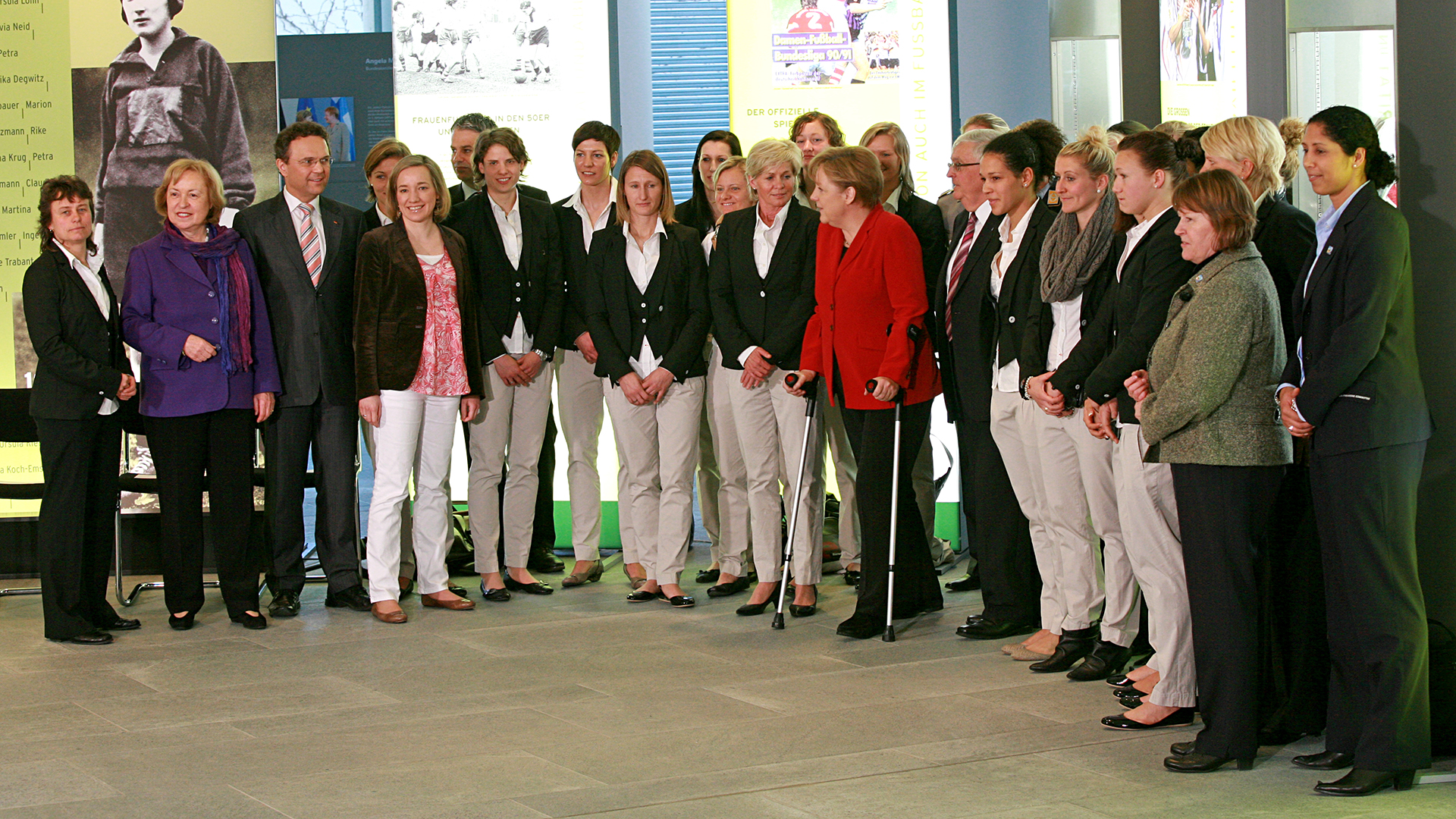
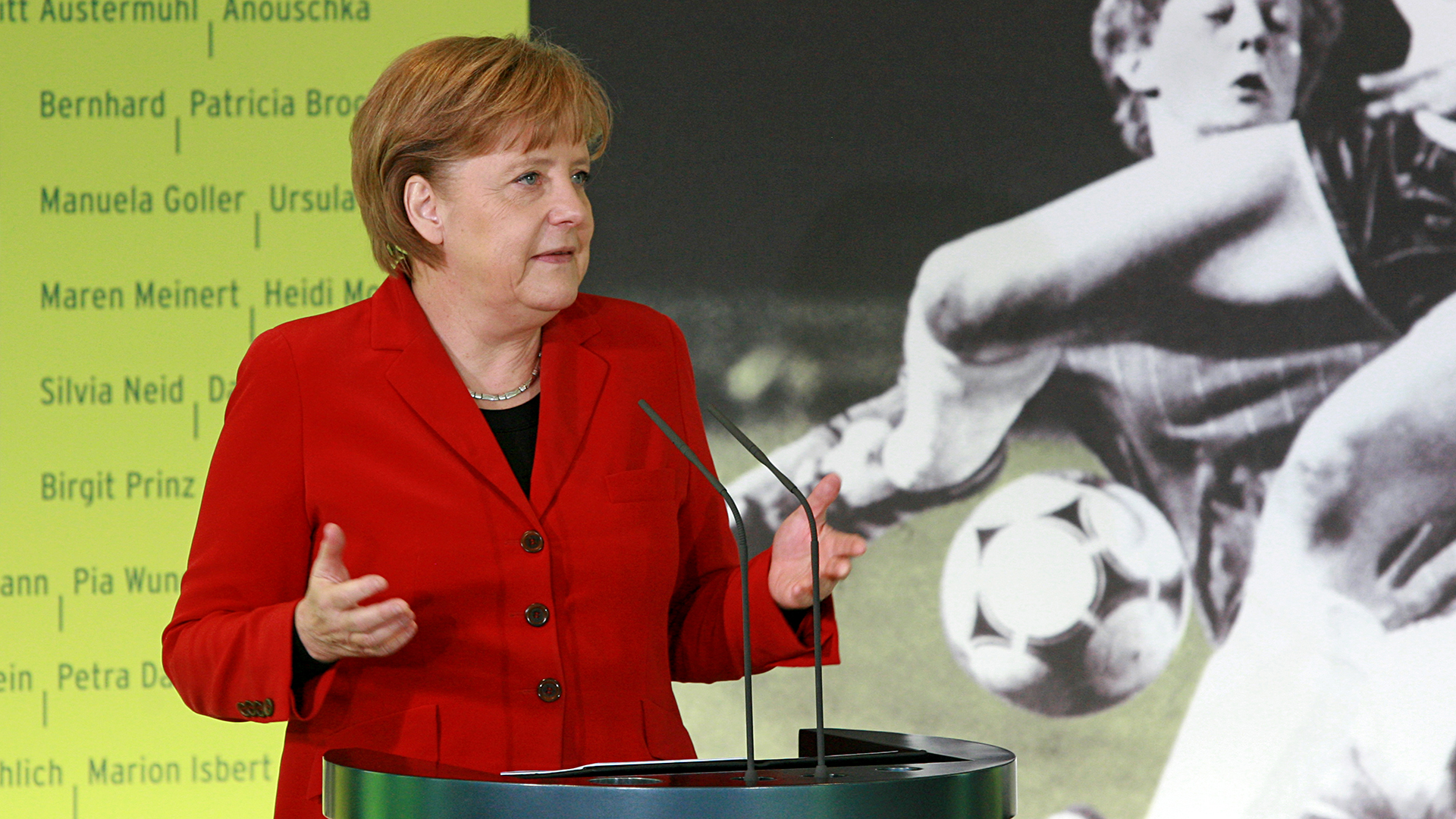
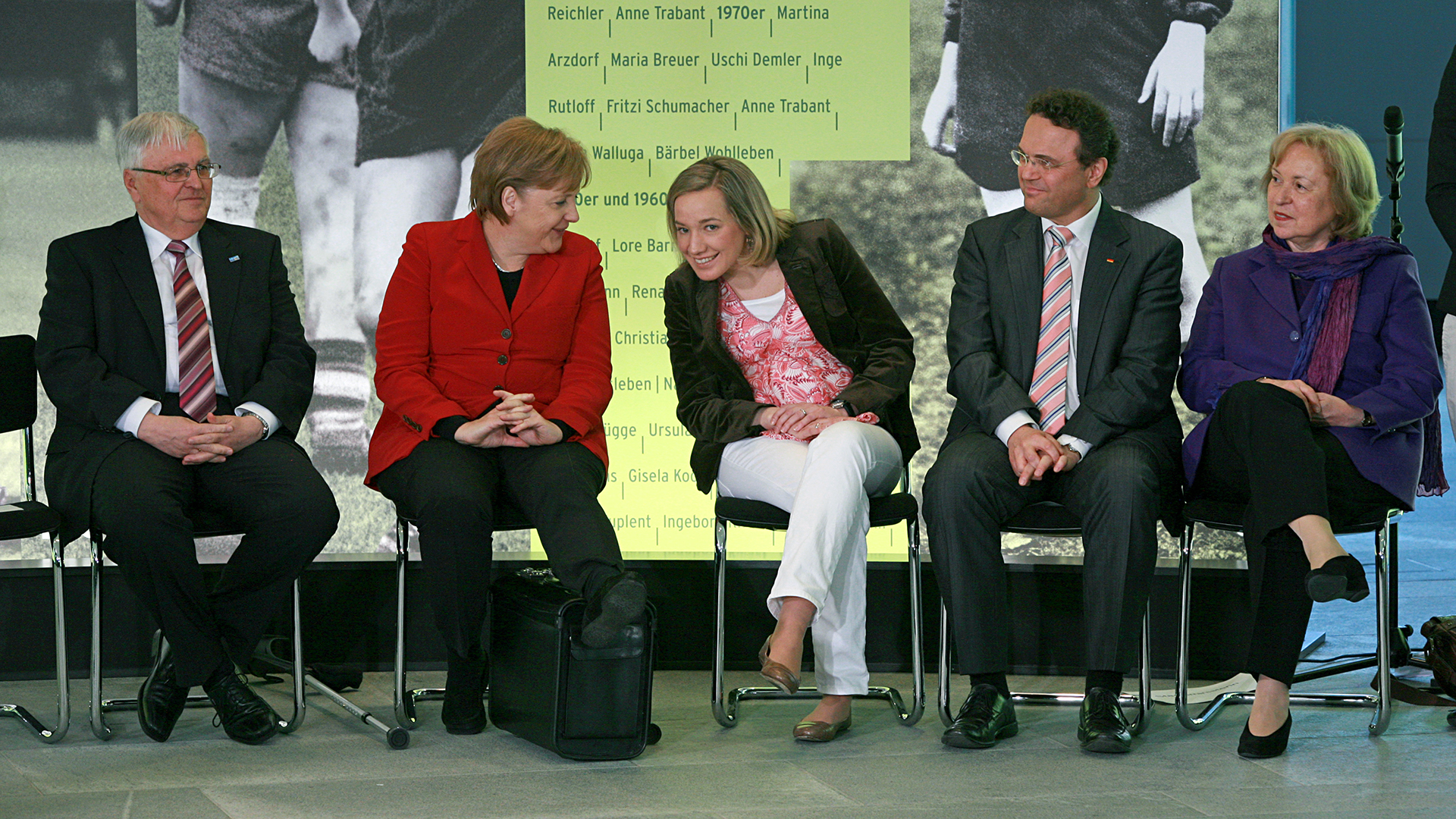
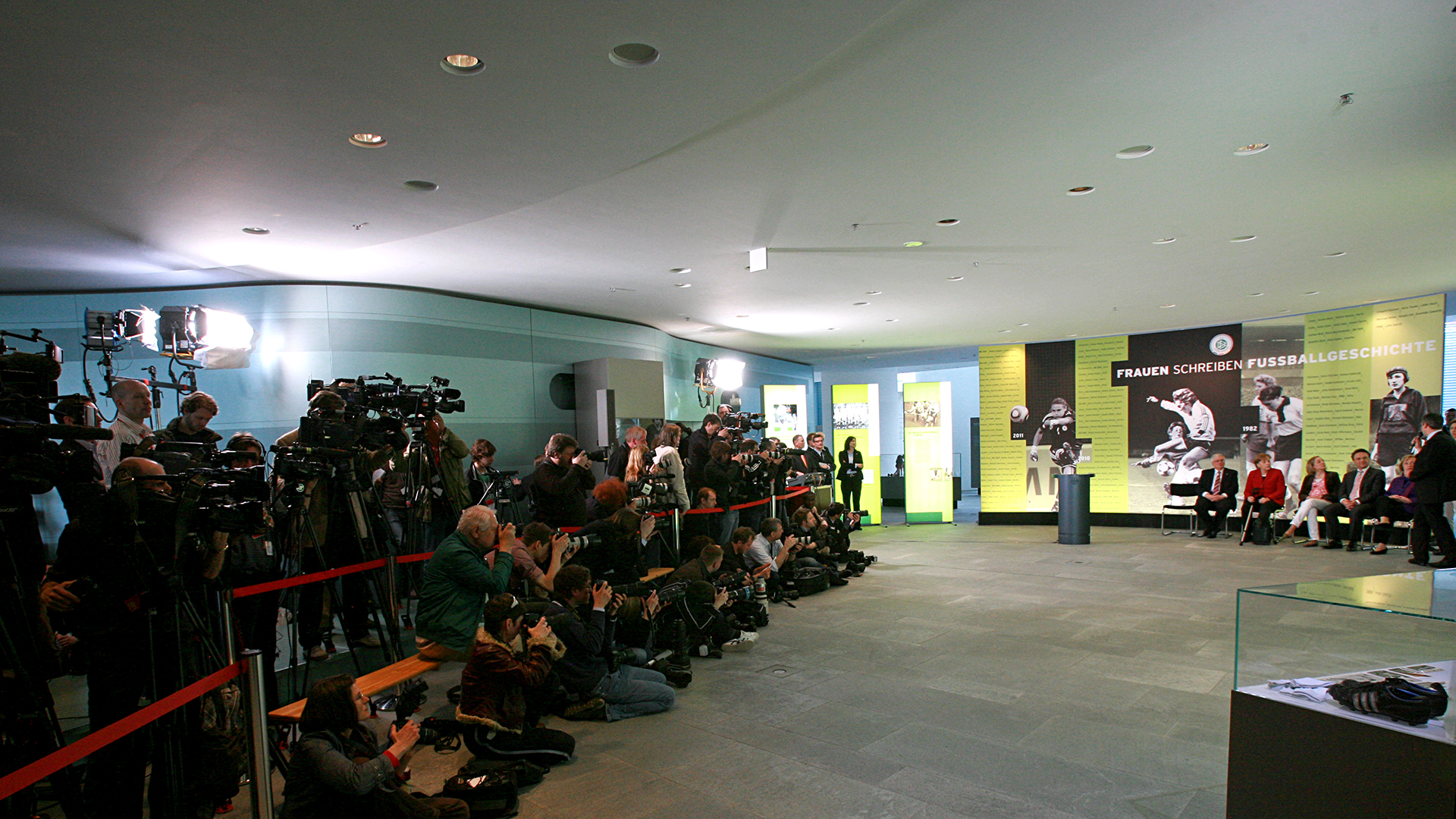
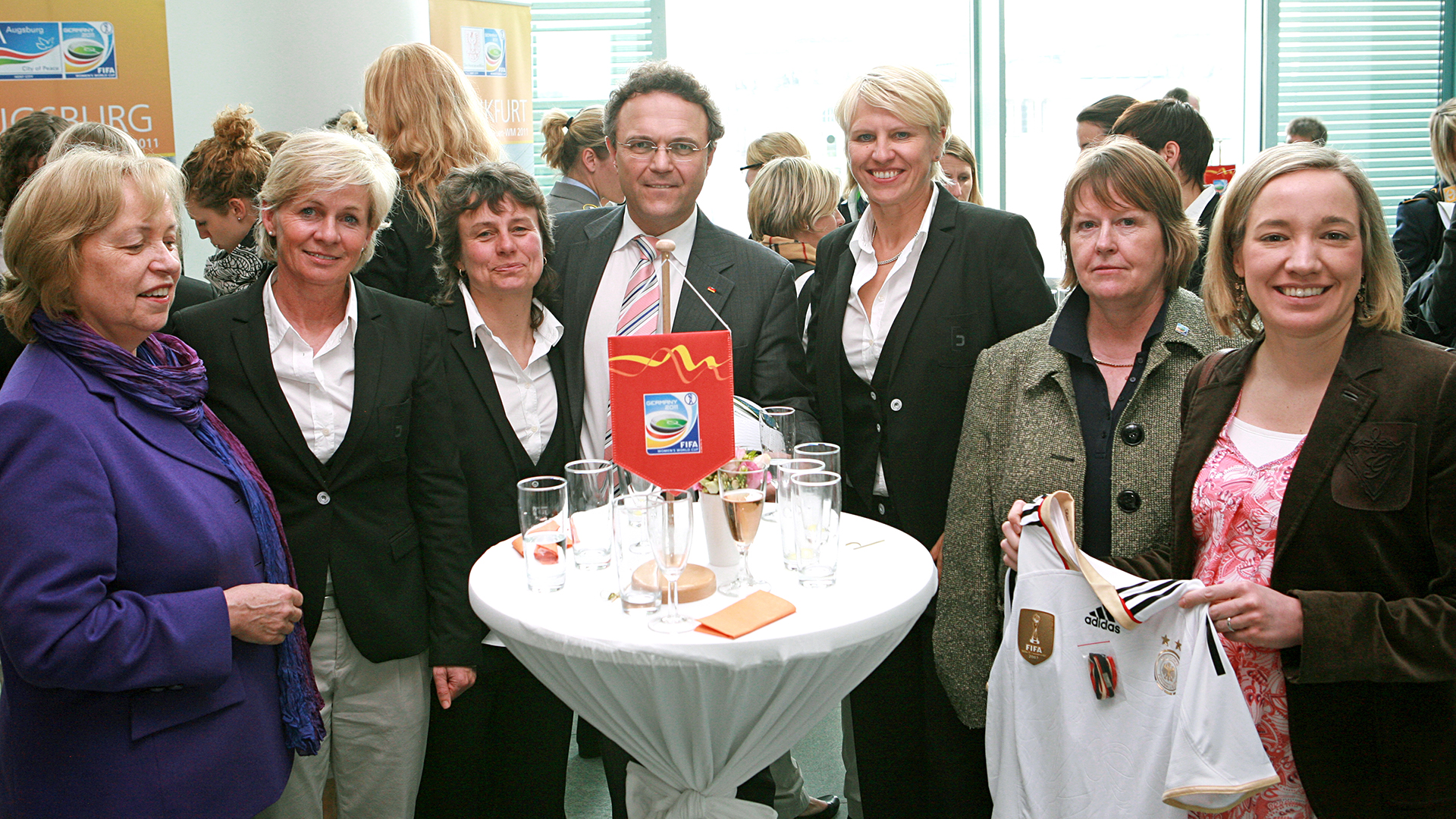
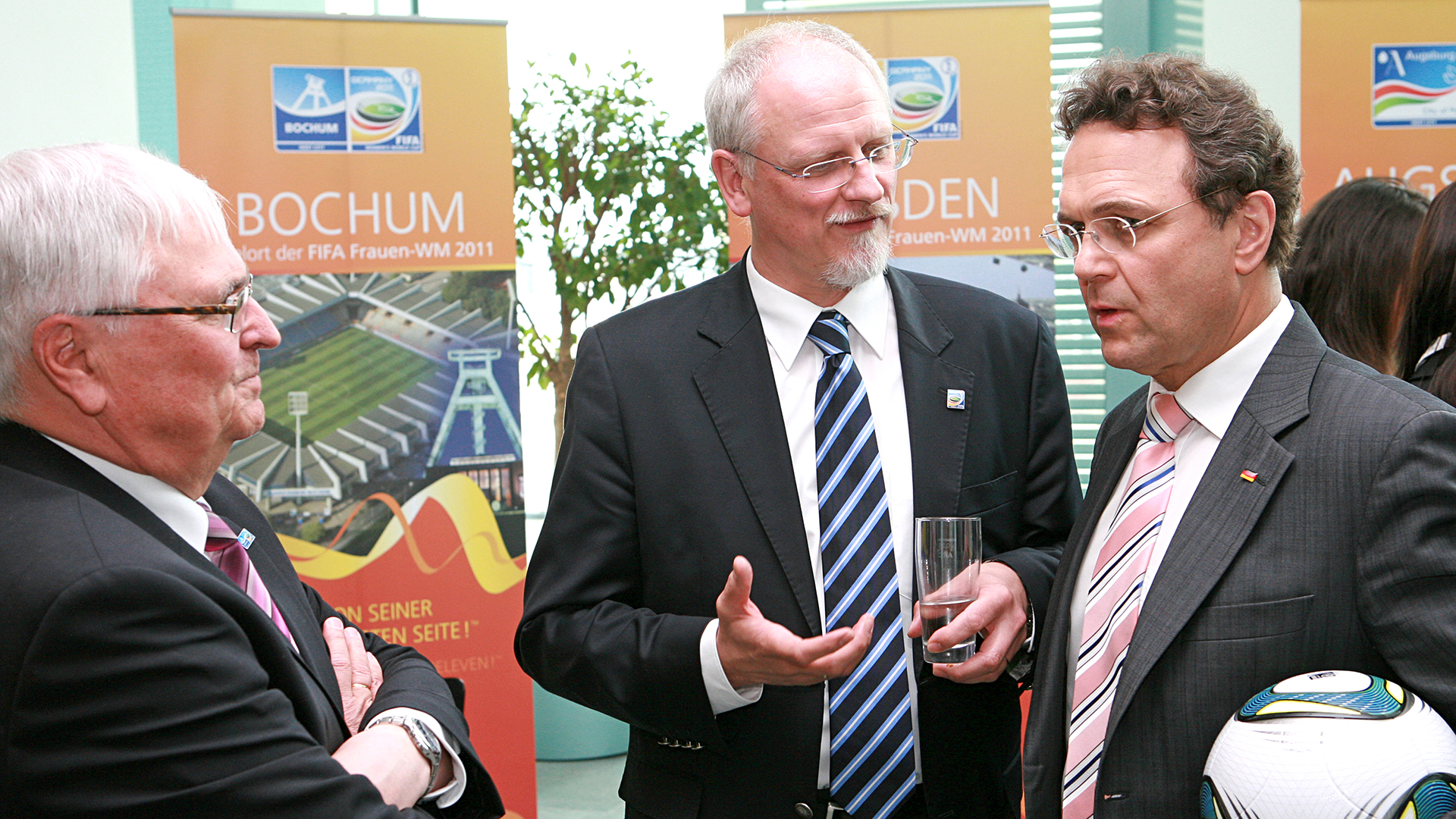
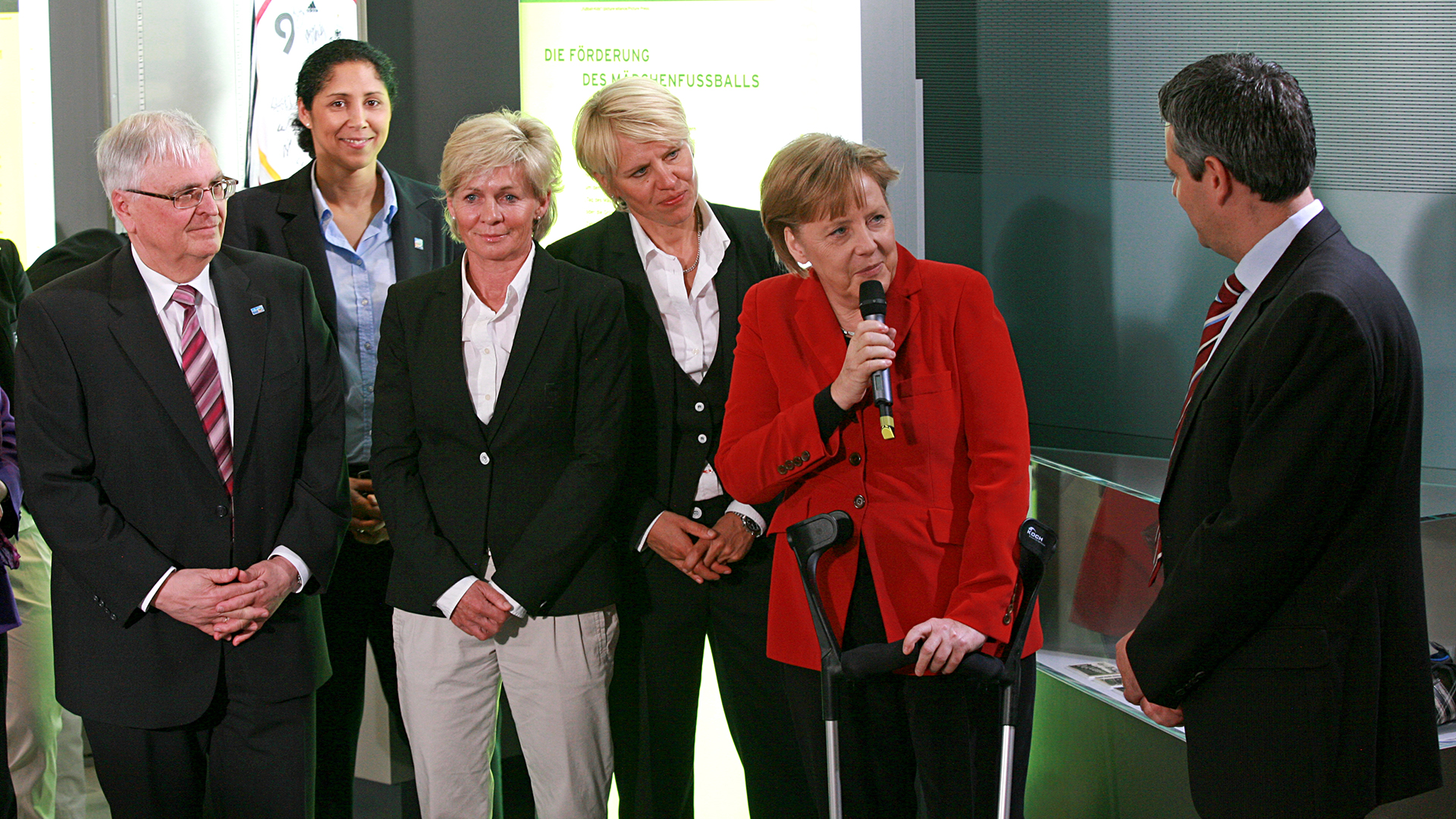
On 5 April 2011, Chancellor Angela Merkel opened the exhibition ‘Women Make Football History’, organised by the DFB Foundation’s German Football Museum, in the foyer of the Federal Chancellery in Berlin. The event took place as part of a reception hosted by the Chancellor for the women’s national team. 82 days before the opening match of the 2011 FIFA Women’s World Cup in Germany, the exhibition set the scene for the next major international football event in Germany.
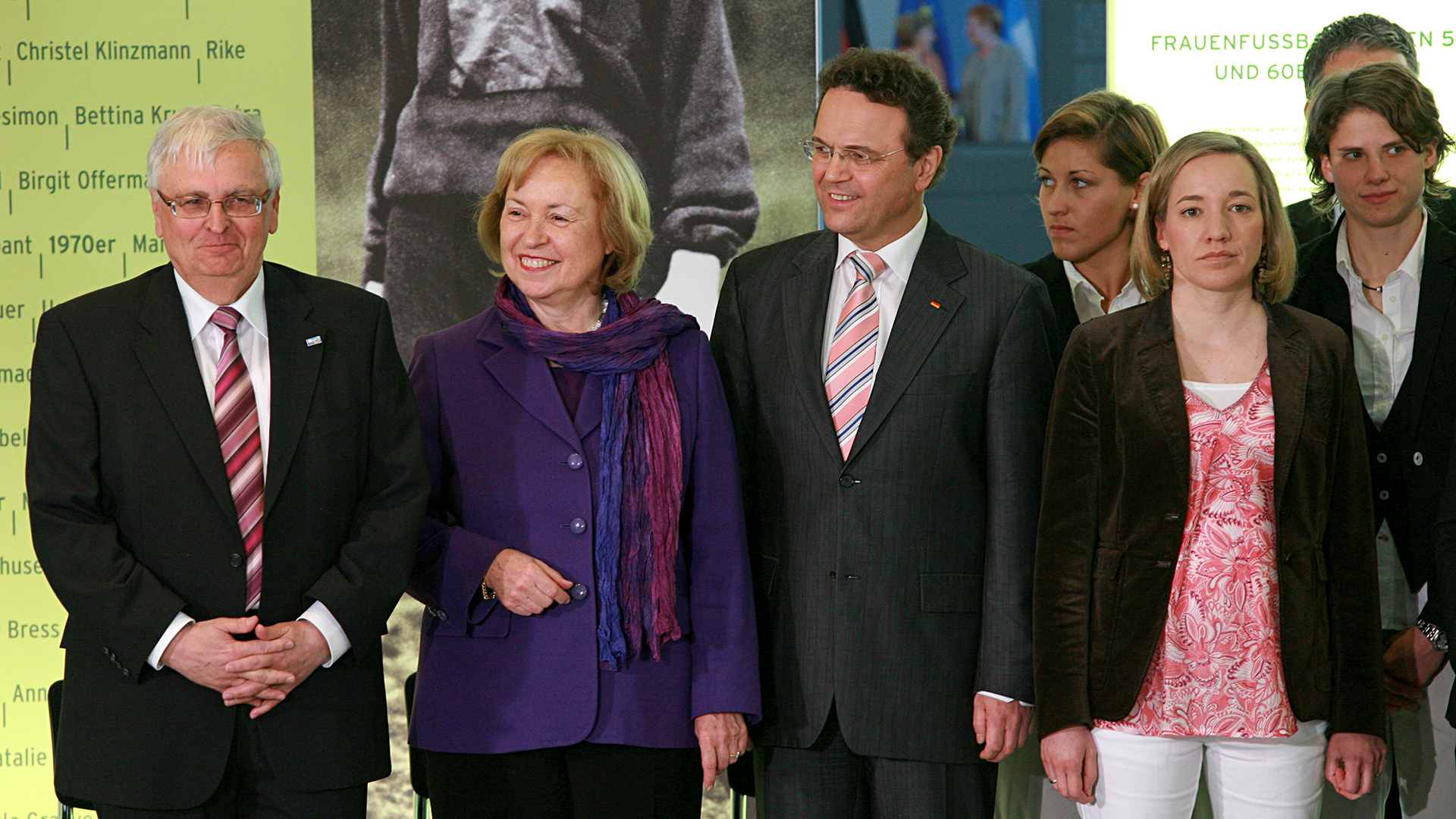
The then DFB President, Dr Zwanziger, said in his welcoming speech: “Women’s football has been an important part of the DFB since 1970. The women’s national team has made a very significant contribution to this through its successes. It therefore rightly enjoys great respect and high levels of public support. The 2011 World Cup on home soil is set to give this positive trend a further boost. So let us look forward to this event; let us look forward to a great football festival. The exhibition will certainly help to create a positive atmosphere. With this in mind, I wish all guests and visitors to the Federal Chancellery an interesting experience as they tour the exhibition.”
Chancellor Merkel addressed a small group of invited guests from the worlds of sport and politics: “This summer, Germany is hosting the 6th FIFA Women’s World Cup. I am delighted to be able to present the exhibition ‘Women Make Football History’ at the Federal Chancellery, in collaboration with the DFB Football Museum Foundation, to mark the Women’s World Cup. This brief journey through the history of women’s football vividly illustrates the ups and downs that preceded the great successes of German women’s football. I wish all visitors an engaging experience and, last but not least, a successful 2011 World Cup for our women’s team.”
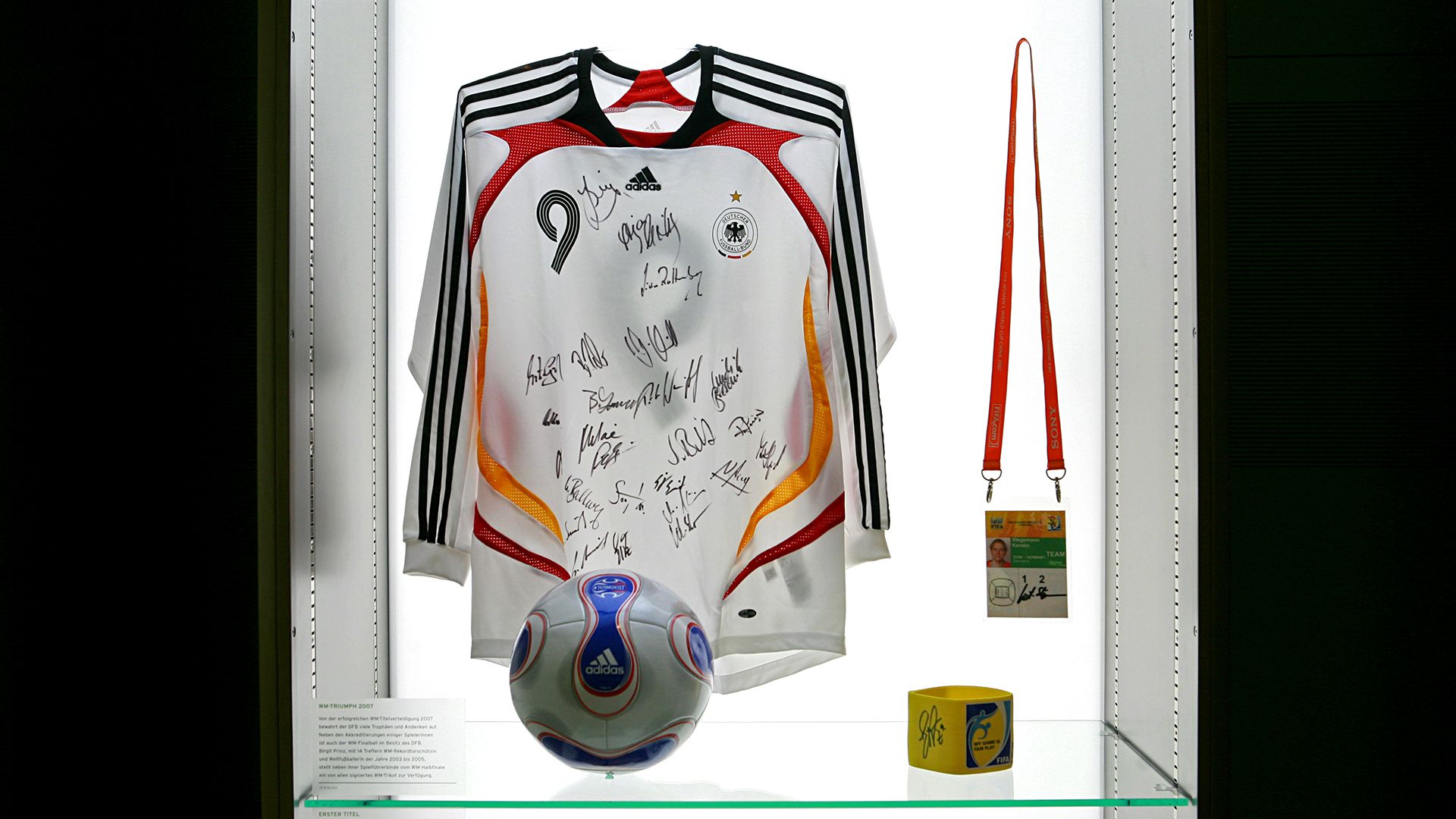
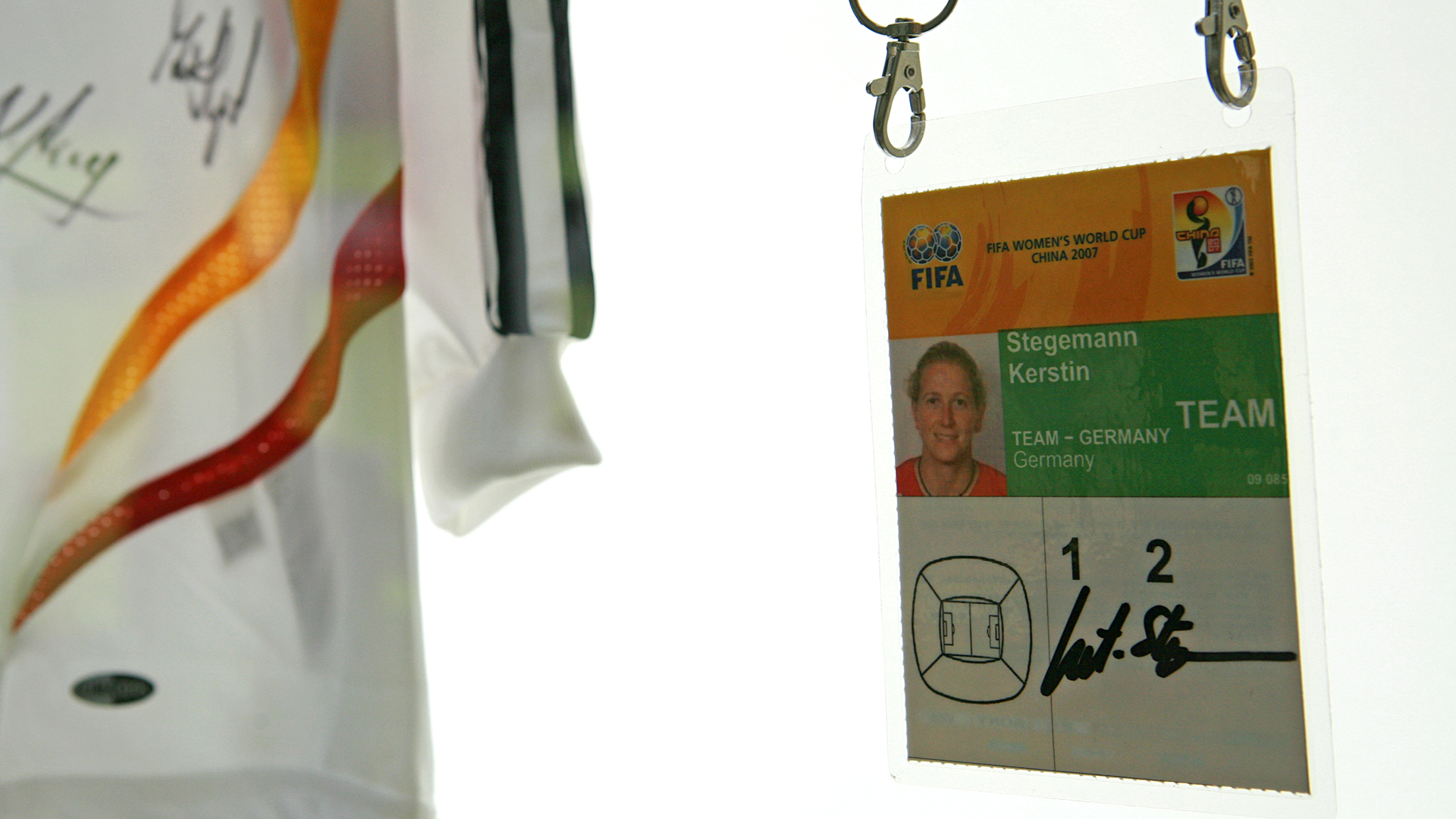
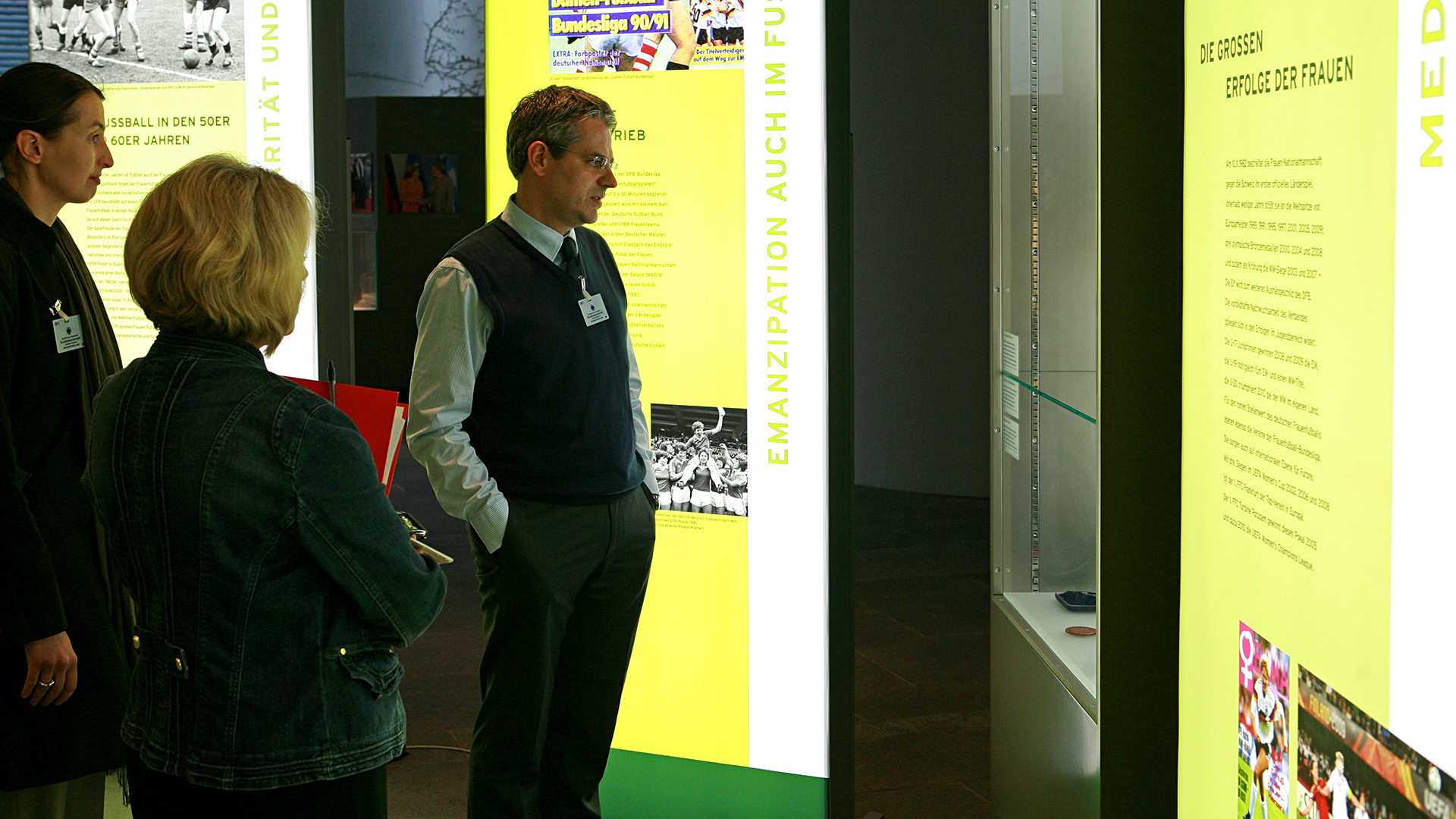
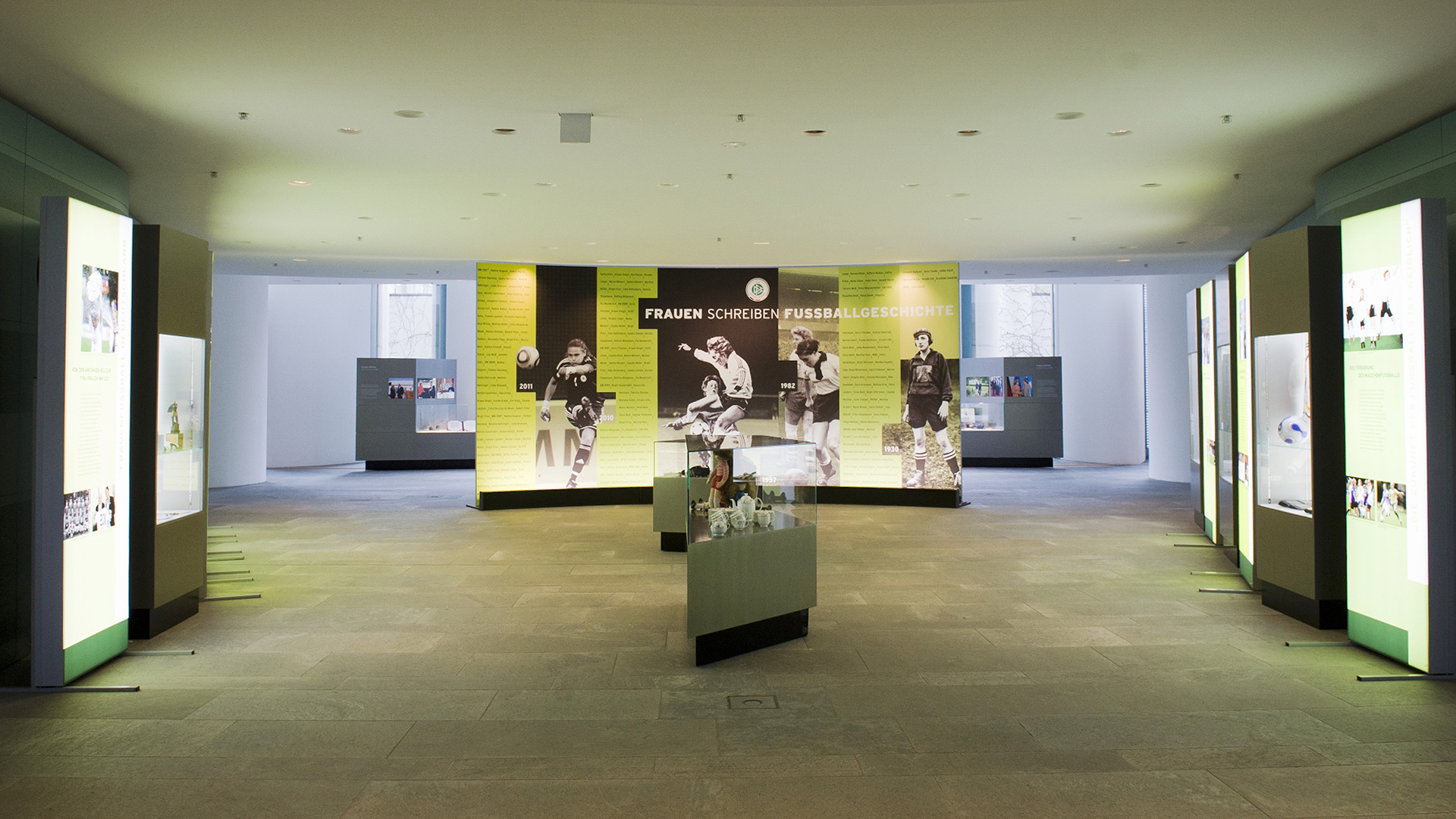
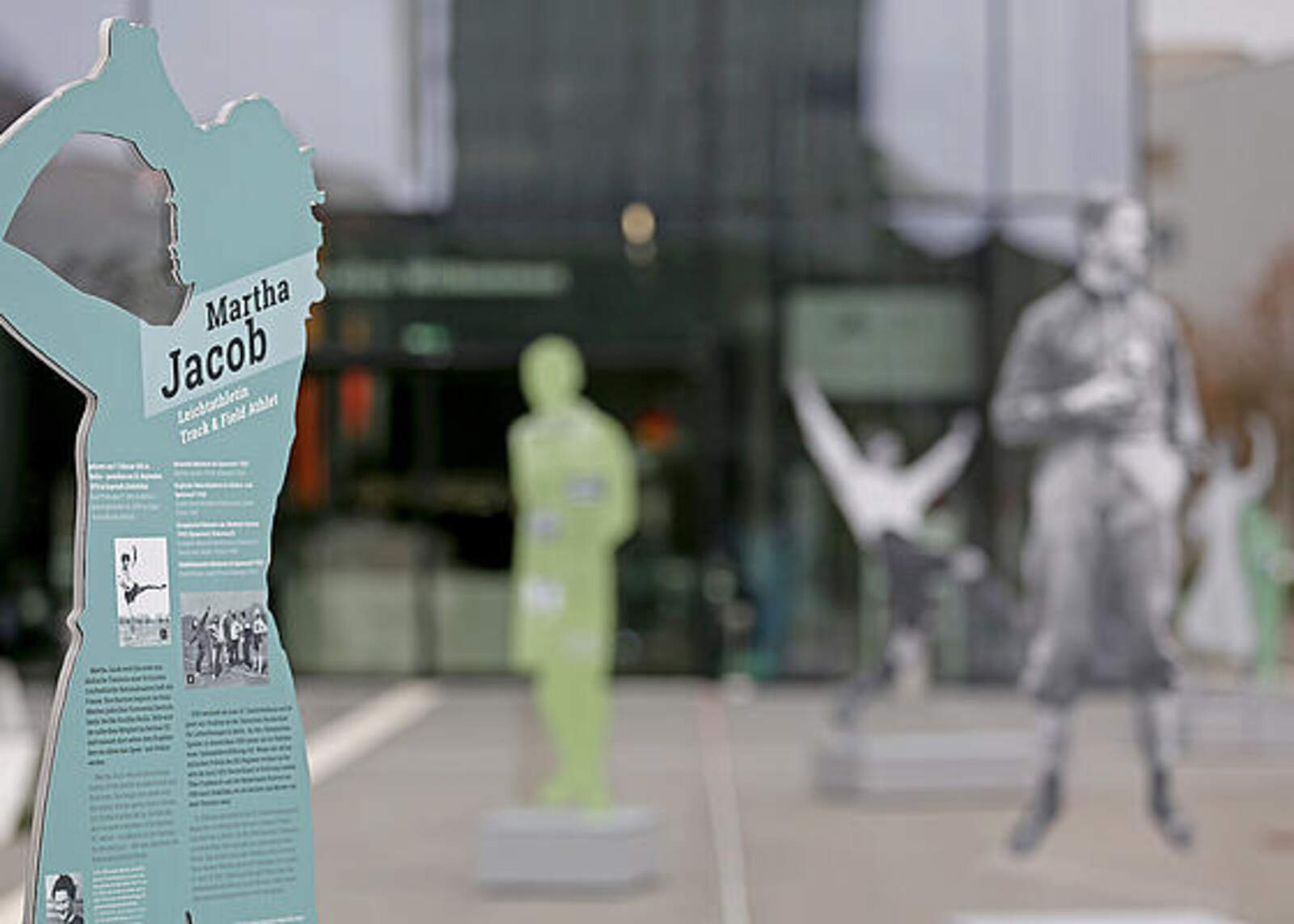
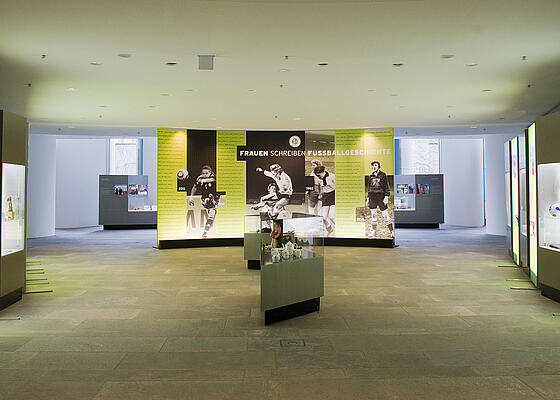
For just over two weeks, the foyer of the Federal Chancellery hosted more than 40 original exhibits and numerous photographic documents, which impressively document the history of women’s football against the backdrop of the social climate of the times. These include the early days at the end of the 19th century as well as the great successes of the women’s national team from 1989 onwards. On display were items illustrating the development of women’s football, such as kit from the 1950s, as well as the ball used in the 2007 World Cup final and Silke Rottenberg’s goalkeeper’s gloves from the 2005 European Championship final.
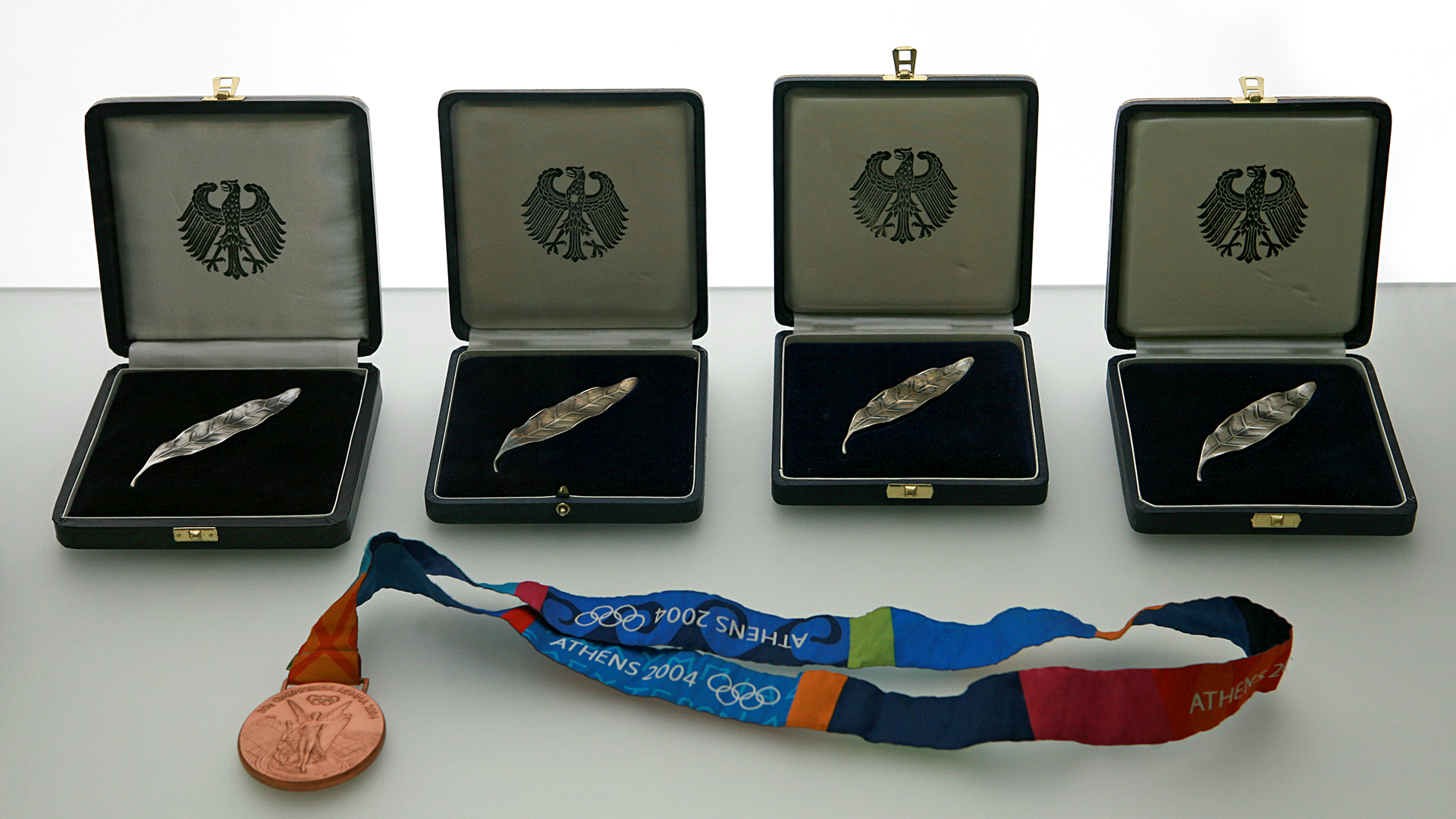
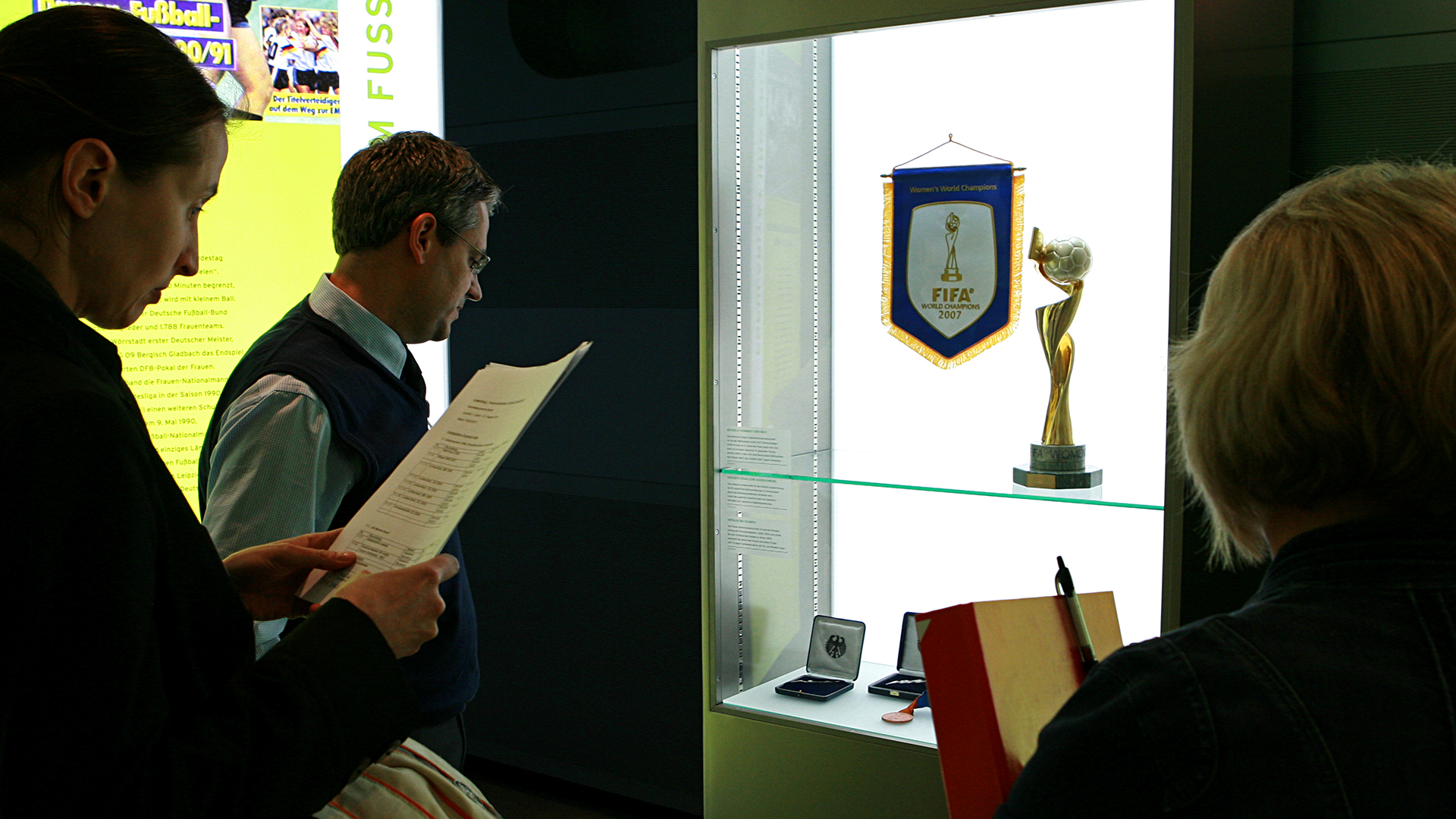
In addition, the DFB Foundation’s German Football Museum opened the treasury of German football: Medals, trophies and plaques showcased the women’s national team’s seven European Championship triumphs to date, from 1989 to 2009, as well as their World Cup victories in 2003 and 2007. A large panoramic wall paid tribute to great female players who epitomise the impressive development of German women’s football. A film and audio station documented the highlight to date in the success story of women’s football in Germany: hosting the 2011 FIFA Women’s World Cup.
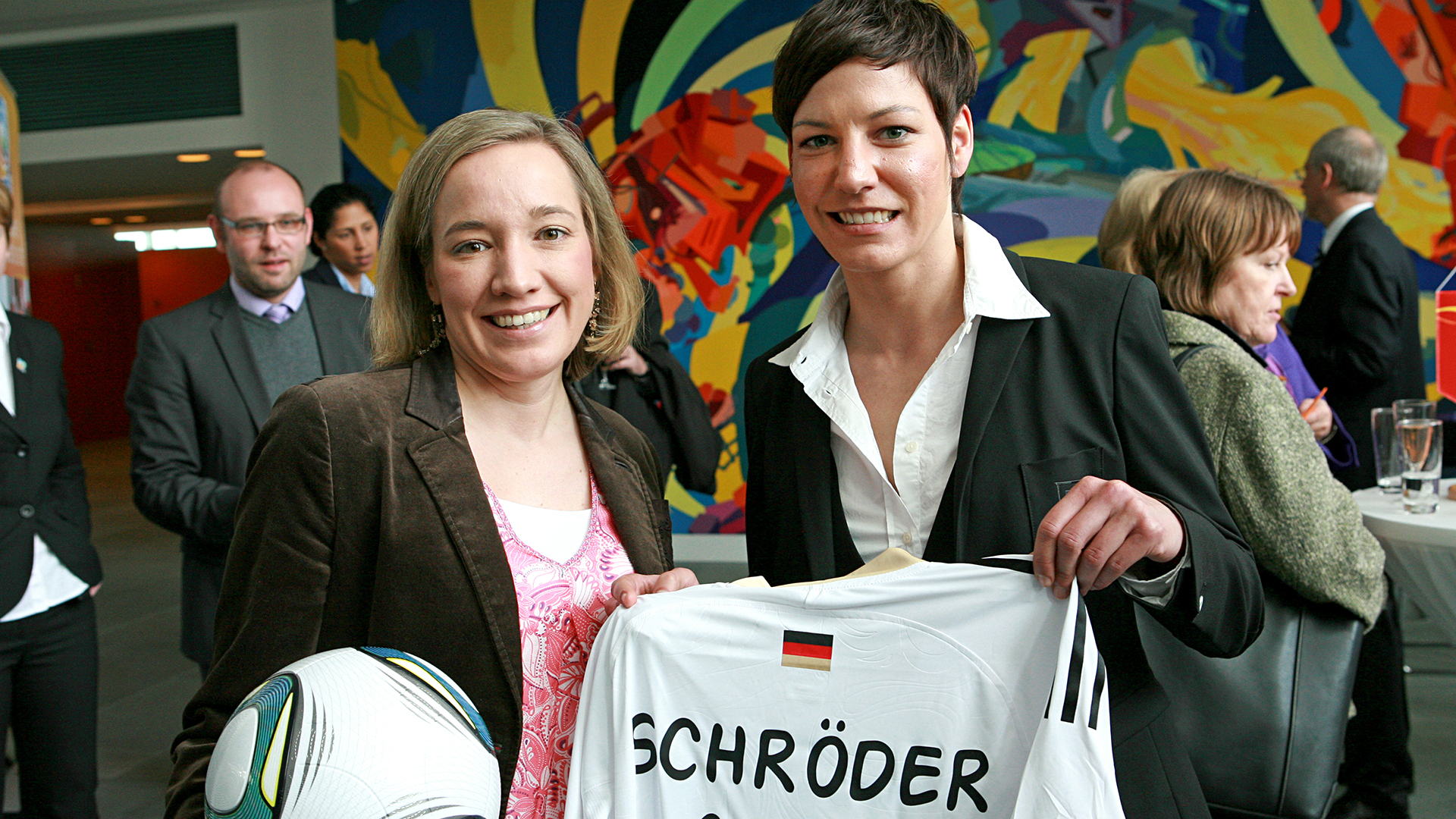
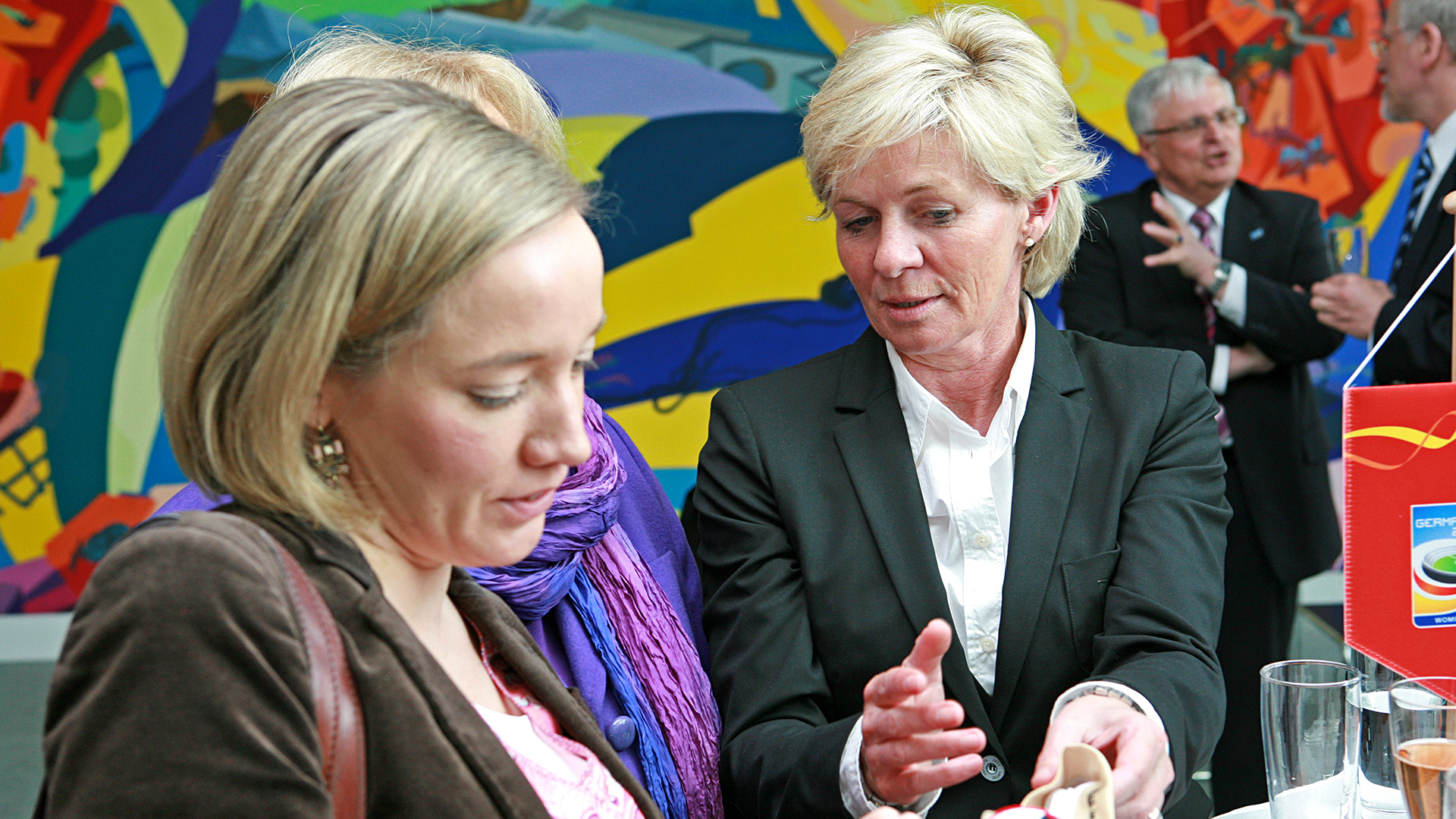
Among the first visitors to the exhibition were Dr Theo Zwanziger and Organising Committee President Steffi Jones, as well as the then Federal Minister of the Interior, Hans-Peter Friedrich, and the then Federal Minister for Family Affairs, Kristina Schröder, alongside national team coach Silvia Neid – who remained in post until 2016 – and the women’snational team, whom Chancellor Merkel invited for a personal discussion following the exhibition’s opening.
Manuel Neukirchner, Managing Director of the DFB Foundation German Football Museum, said after the tour of the exhibition: “It is a great pleasure for our foundation to draw attention to women’s football with an exhibition at the Federal Chancellery some four years before the planned opening of our museum in Dortmund. We have deliberately chosen a traditional, informative format that is appropriate for the Federal Chancellery. We want to focus attention on the eventful history of women’s football, as well as its significance in the present and future.”
The exhibition “Women Make Football History” was open to registered visitor groups at the Federal Chancellery and concluded on the Federal Government’s “Open Day” at the end of August 2011, when the exhibition was also open to the general public.










![[Translate to Englisch:] 100 Jahre DJK - Eröffnung](/fileadmin/_processed_/3/e/csm_fussballmuseum-100-jahre-djk-sport-leib-seele_ab21a5151e.jpg "100 Years of DJK – Opening Ceremony")


The German Football Museum is well worth a visit! Book your tickets here...